
What Is LIMS Used For? Key Applications and Benefits Explained

Overview
Laboratory Information Management Systems (LIMS) serve as essential tools for managing specimens and their associated information, significantly enhancing operational efficiency and ensuring regulatory compliance in laboratory settings. By automating testing procedures, LIMS not only facilitates specimen tracking but also bolsters data integrity. This streamlining of laboratory operations supports informed decision-making within compliance-driven environments.
As laboratories face increasing compliance challenges, the implementation of LIMS emerges as a vital solution, driving both efficiency and adherence to regulatory standards. Engaging with AVS Life Sciences can empower laboratories to leverage LIMS effectively, transforming compliance from a challenge into a strategic advantage.
Introduction
Laboratories serve as the backbone of scientific discovery, yet they frequently confront the complexities of managing extensive data and adhering to stringent regulations. A Laboratory Information Management System (LIMS) stands out as a transformative solution, streamlining operations and enhancing both data integrity and regulatory compliance.
What makes LIMS indispensable in modern laboratories?
How can it revolutionize workflows and decision-making processes?
By exploring its key applications and benefits, we uncover not only its critical role in boosting efficiency but also the challenges laboratories encounter in its absence.
Define LIMS: Understanding the Laboratory Information Management System
A Laboratory Information Management System (LIMS) is an essential, software-driven solution that helps answer what is LIMS used for by effectively managing specimens, associated information, and research processes. It not only facilitates the monitoring of samples and their outcomes but also , ensuring strict adherence to regulatory standards.
In various sectors, including pharmaceuticals, biotechnology, and clinical research, knowing what is LIMS used for is crucial as it enhances data integrity and operational efficiency. By centralizing information management, the LIMS fosters improved decision-making and streamlines laboratory operations, ultimately driving compliance and excellence in research outcomes.

Explore LIMS Applications: Enhancing Laboratory Operations and Compliance
Laboratory Information Management Systems (LIMS) offer a comprehensive suite of applications that help clarify what LIMS is used for in meeting the unique demands of diverse laboratories. Key features include:
- Specimen tracking
- Information management
- Inventory control
- Robust reporting capabilities
Within pharmaceutical settings, LIMS are critical for managing clinical trial samples, ensuring meticulous documentation and accessibility for regulatory submissions. For instance, the latest iteration of LabVantage 8.9 significantly enhances laboratory productivity through improved information management efficiencies and expedited database processing—both vital in compliance-driven environments.
Moreover, this system seamlessly integrates with other laboratory devices and software, facilitating efficient information transfer and optimizing overall operational workflows. By automating routine tasks, LIMS enable staff to concentrate on more critical analytical functions, thereby enhancing productivity and ensuring adherence to regulatory standards. Notably, over 70% of laboratories now utilize LIMS for tracking and information management, highlighting what LIMS is used for in modern laboratory operations. This trend reflects a growing recognition among compliance officers of the benefits that LIMS provide in terms of tracking and maintaining information integrity, ultimately .
Examine Core Components: Key Features of LIMS and Their Impact
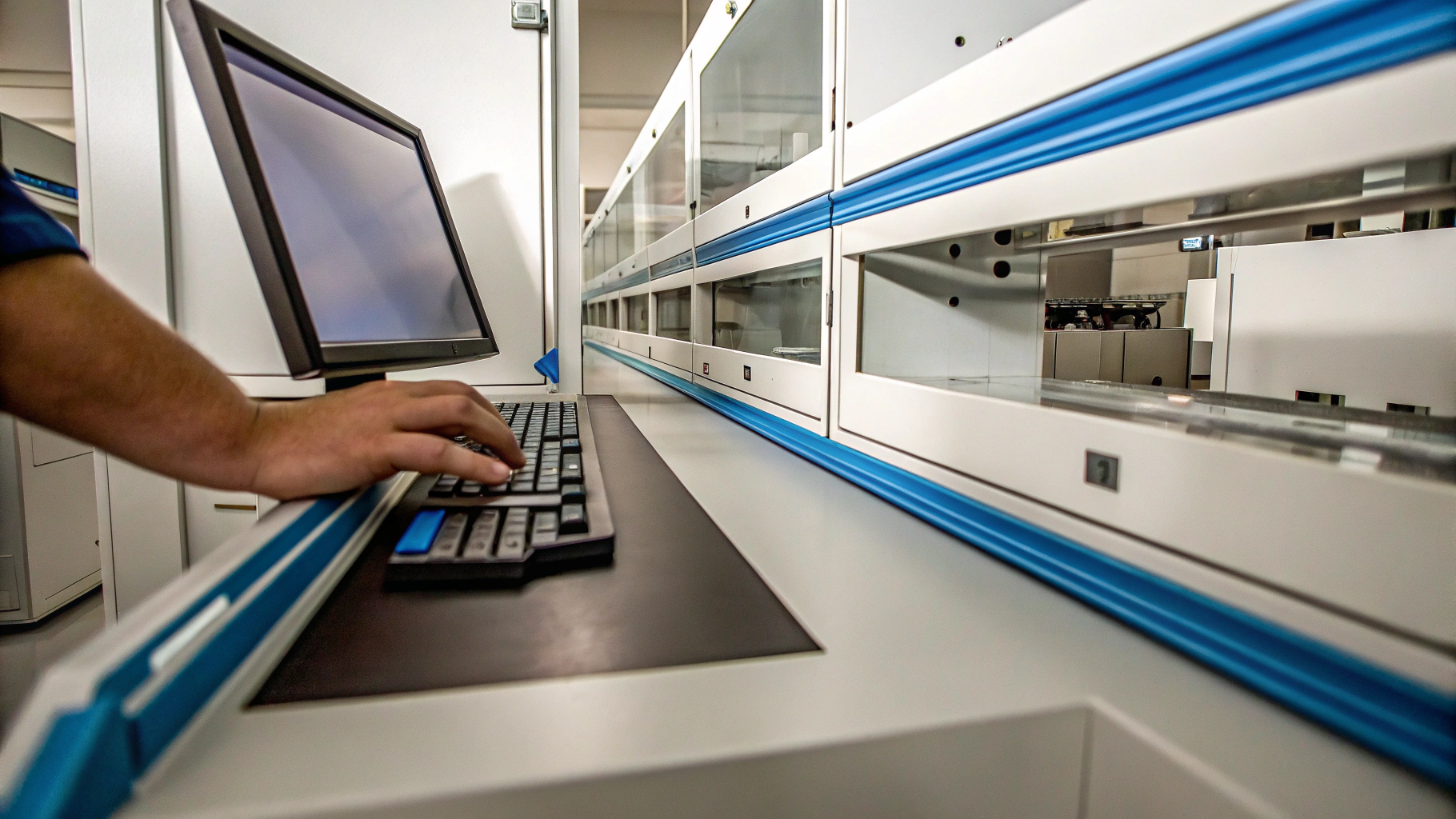
The essential elements of a Laboratory Information Management System (LIMS), including specimen management, data management, workflow automation, and reporting capabilities, illustrate what LIMS is used for in ensuring compliance with regulatory standards. Sample oversight is crucial for monitoring specimens from receipt to disposal, ensuring traceability and responsibility throughout the process. This capability not only improves operational efficiency but also ensures compliance with regulatory standards, as facilities are required to maintain precise records of sample handling.
Information management features facilitate the secure storage and retrieval of experimental information, which is essential for maintaining integrity and adherence to regulations such as 21 CFR Part 11 and ISO standards. By automating data entry and management, LIMS significantly reduces the potential for human error, thereby enhancing the reliability of test results.
streamlines laboratory processes and enhances productivity. By automating repetitive tasks and integrating with lab equipment, facilities can minimize manual intervention—a frequent source of errors. This automation leads to faster turnaround times and more efficient resource utilization, ultimately resulting in improved operational outcomes.
Strong reporting capabilities empower facilities to generate compliance reports and audit trails, which are vital for fulfilling regulatory obligations. These reports provide transparency and accountability, ensuring that laboratories can demonstrate adherence to quality standards during inspections.
The Computer System Validation (CSV) process, encompassing stages such as Installation Qualification (IQ), Operational Qualification (OQ), and Performance Qualification (PQ), is essential for verifying that laboratory information management systems function as intended and adhere to regulatory standards. For instance, during the IQ phase, the implementation of the laboratory information management system is confirmed against predefined specifications, ensuring proper configuration. In the OQ stage, the system's functionality is rigorously tested to confirm its operation as intended in the user environment. Finally, the PQ stage simulates real-world scenarios to ensure reliable system performance under various conditions.
By integrating these elements, the system enhances the overall quality and dependability of scientific operations, enabling organizations to respond efficiently to the evolving demands of the life sciences sector.

Highlight Benefits: How LIMS Supports Regulatory Compliance and Efficiency
Deploying a laboratory information management system from AVS Life Sciences presents numerous advantages, including improved regulatory adherence, enhanced information accuracy, and greater operational effectiveness. By automating data gathering and administration, AVS Life Sciences' system minimizes the risk of errors and ensures that facilities can maintain compliance with Good Manufacturing Practices (GMP), ISO standards, and Quality System Regulations (QSR).
Furthermore, the system facilitates quicker turnaround times for processing and reporting, which is crucial in fast-paced research environments. For example, a pharmaceutical firm that adopted AVS Life Sciences' laboratory information management system experienced a 30% reduction in sample processing time, leading to expedited regulatory submissions and improved project timelines.
In summary, AVS Life Sciences' LIMS is an essential tool for laboratories that need to know what is LIMS used for in order to while enhancing their operational capabilities.

Conclusion
A Laboratory Information Management System (LIMS) stands as a crucial solution for managing laboratory operations, ensuring that vital processes related to specimen tracking, data management, and regulatory compliance are streamlined and efficient. By centralizing information and automating routine tasks, LIMS not only enhances operational effectiveness but also supports laboratories in meeting stringent regulatory requirements, thereby reinforcing the integrity of research outcomes.
The article outlines several key applications and benefits of LIMS, including its role in:
- Specimen tracking
- Workflow automation
- Robust reporting capabilities
These features are particularly crucial in sectors like pharmaceuticals and clinical research, where meticulous documentation and compliance with standards such as GMP and ISO are mandatory. The integration of LIMS with laboratory equipment further optimizes workflows, reduces human error, and accelerates processing times, allowing laboratories to focus on critical analytical tasks.
In light of these insights, it is evident that embracing a Laboratory Information Management System is essential for laboratories aiming to enhance efficiency and maintain compliance in an increasingly complex regulatory landscape. As the life sciences sector continues to evolve, investing in a robust LIMS can significantly improve not only operational capabilities but also the overall quality of scientific research and outcomes. Therefore, organizations are encouraged to consider the implementation of LIMS to navigate the challenges of modern laboratory management effectively.
Frequently Asked Questions
What is a Laboratory Information Management System (LIMS)?
A Laboratory Information Management System (LIMS) is a software-driven solution designed to manage specimens, associated information, and research processes in laboratories.
What are the primary functions of LIMS?
LIMS facilitates the monitoring of samples and their outcomes, automates testing procedures, and ensures compliance with regulatory standards.
In which sectors is LIMS commonly used?
LIMS is commonly used in sectors such as pharmaceuticals, biotechnology, and clinical research.
How does LIMS enhance data integrity and operational efficiency?
By centralizing information management, LIMS improves decision-making and streamlines laboratory operations, leading to enhanced data integrity and operational efficiency.
What benefits does LIMS provide in terms of research outcomes?
LIMS drives compliance and excellence in research outcomes by effectively managing laboratory processes and information.