
Master Salon Worker Cosmetic Safety Laws for Compliance Success

Overview
This article underscores the critical importance of understanding and adhering to cosmetic safety laws for salon workers, ensuring a safe environment for both employees and clients. Compliance with regulations such as the Federal Food, Drug, and Cosmetic Act and the Toxic-Free Cosmetics Act is not merely advisable; it is essential. These laws play a pivotal role in preventing exposure to harmful chemicals, thereby safeguarding public health and minimizing legal risks for salons. By prioritizing compliance, salon workers can foster a safer workplace and enhance their professional credibility, ultimately benefiting their business and clientele.
Introduction
Navigating the intricate web of cosmetic safety regulations is crucial for salon workers aiming to protect both their clients and themselves. With laws like the Toxic-Free Cosmetics Act reshaping the landscape of beauty product safety, understanding these regulations is not merely a legal obligation; it is a pathway to fostering a safer salon environment. However, the challenge remains: how can salon professionals effectively implement compliance strategies while ensuring they are using safe, non-toxic products? This article delves into the essentials of cosmetic safety laws, offering insights that empower salon workers to thrive in a compliant and health-conscious industry.
Explore the Basics of Cosmetic Safety Laws for Salon Workers
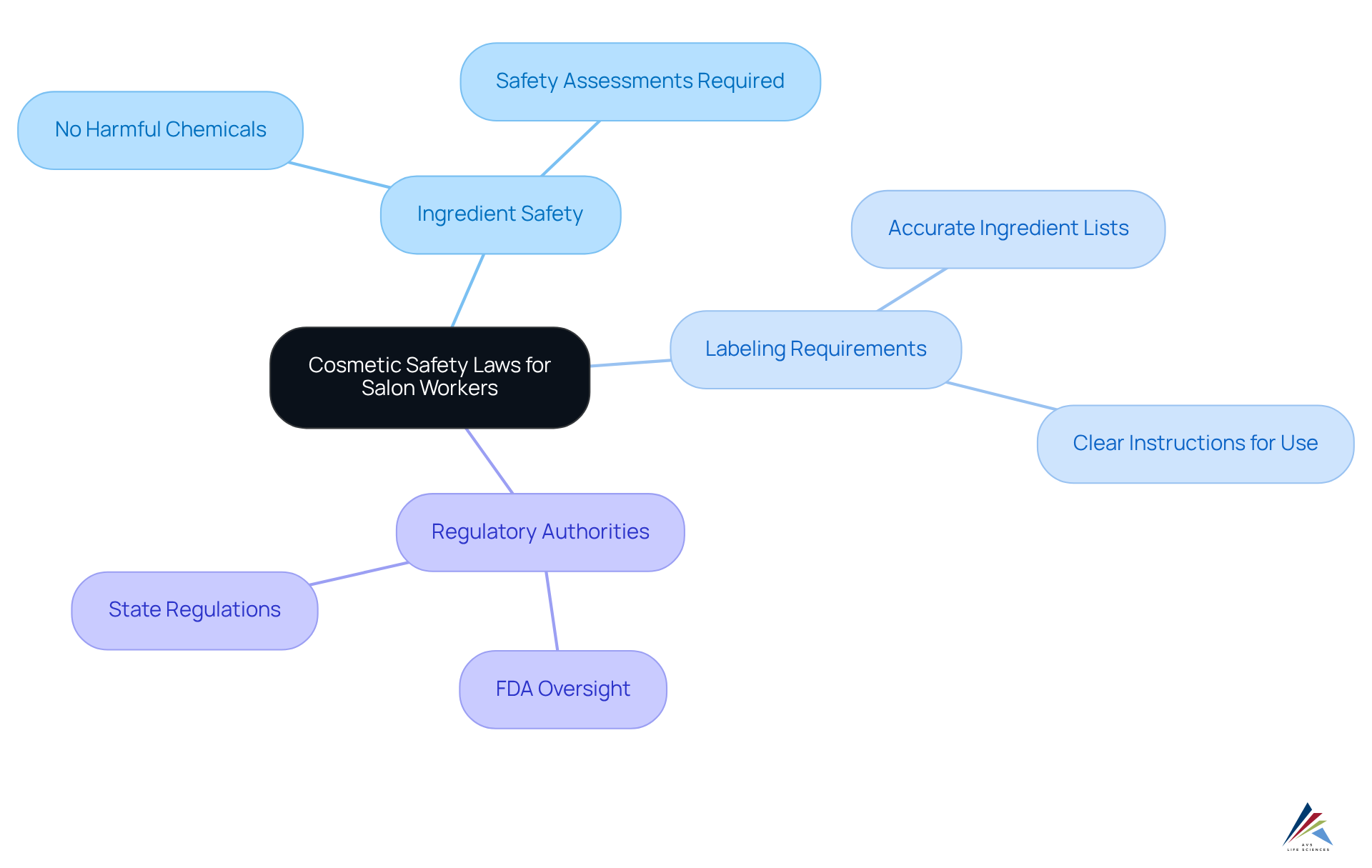
The salon worker is designed to protect both consumers and salon employees from harmful chemicals found in beauty products. A fundamental regulation is the Federal Food, Drug, and Cosmetic Act (FDCA), which governs the safety of beauty products in the United States. Salon workers must be cognizant of the following critical regulations:
- Ingredient Safety: All cosmetic products must be safe for use, ensuring that they do not contain harmful chemicals that could pose health risks.
- Labeling Requirements: Products must be accurately labeled, providing a comprehensive list of all ingredients to inform consumers and professionals about what they are using.
- Regulatory Authorities: While the FDA oversees beauty product standards, state regulations may also apply, adding another layer of compliance for beauty professionals.
By familiarizing themselves with the salon worker cosmetic safety law, salon workers can adeptly navigate the complexities of beauty safety standards, fostering a safer working environment.
Examine Key Legislation: The Toxic-Free Cosmetics Act and Its Impact
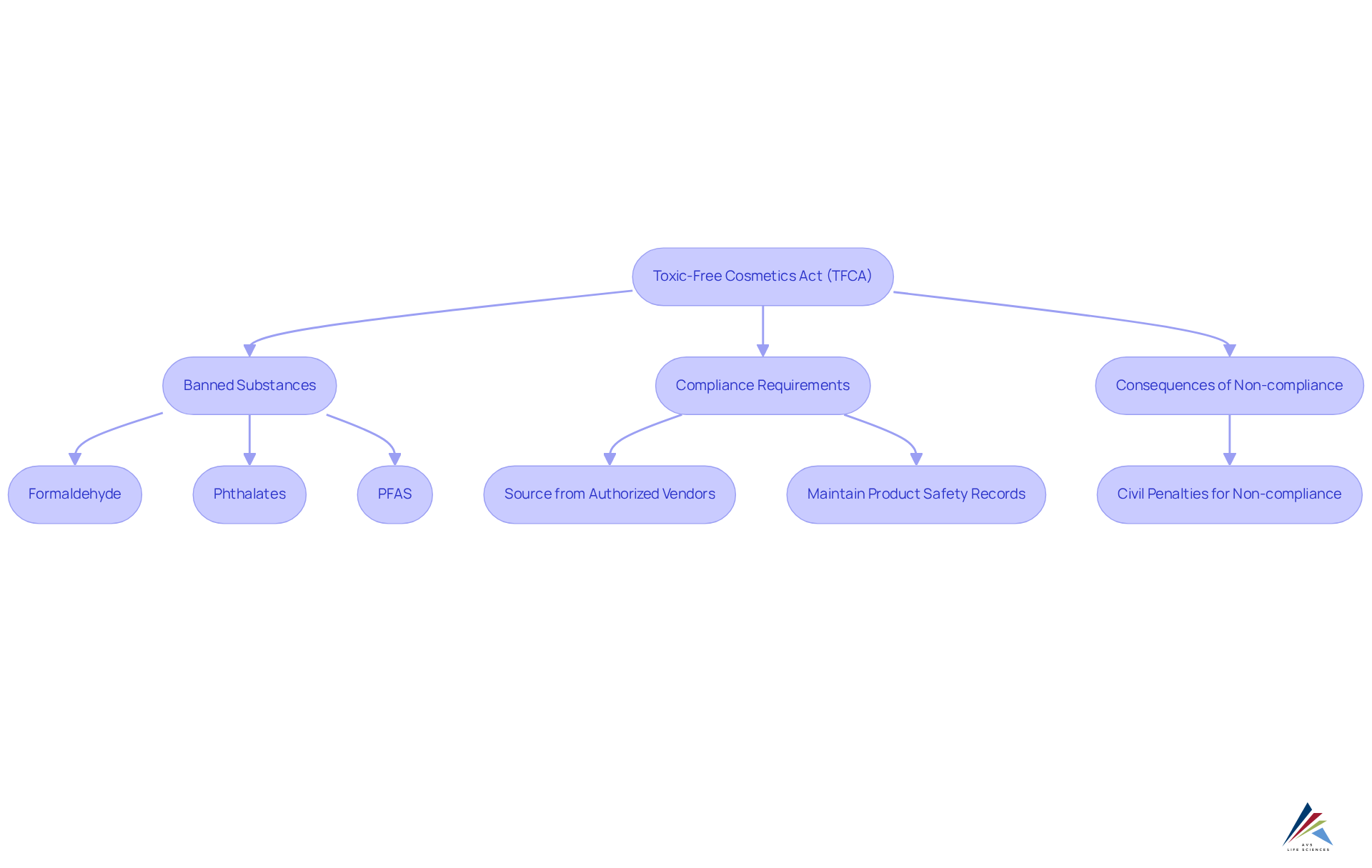
The Toxic-Free Cosmetics Act (TFCA) represents a significant legislative effort aimed at minimizing the use of harmful substances in beauty products, particularly in states like Washington and California. Key elements of the Act include:
- Banned Substances: The TFCA explicitly prohibits hazardous chemicals such as formaldehyde, phthalates, and PFAS in cosmetic products. These substances are recognized for their detrimental health impacts, including associations with cancer and reproductive harm.
This legislation seeks to protect vulnerable populations, including salon workers, in line with the salon worker cosmetic safety law, as they are disproportionately affected by toxic chemical exposure. By eliminating these harmful substances, the TFCA aspires to enhance overall public health and well-being.
Salons must ensure that the products they use comply with the salon worker cosmetic safety law. This may necessitate sourcing from authorized vendors and maintaining meticulous records of product safety. Non-compliance can lead to civil penalties, underscoring the critical importance of adhering to the Act.
Understanding the is vital for beauty professionals to ensure the use of safe products and to mitigate potential legal risks associated with non-compliance.
Implement Compliance Strategies: Navigating Cosmetic Safety Regulations in Salons
To navigate the salon worker cosmetic safety law effectively, salon workers must adopt robust that ensure a safe environment for both staff and clients.
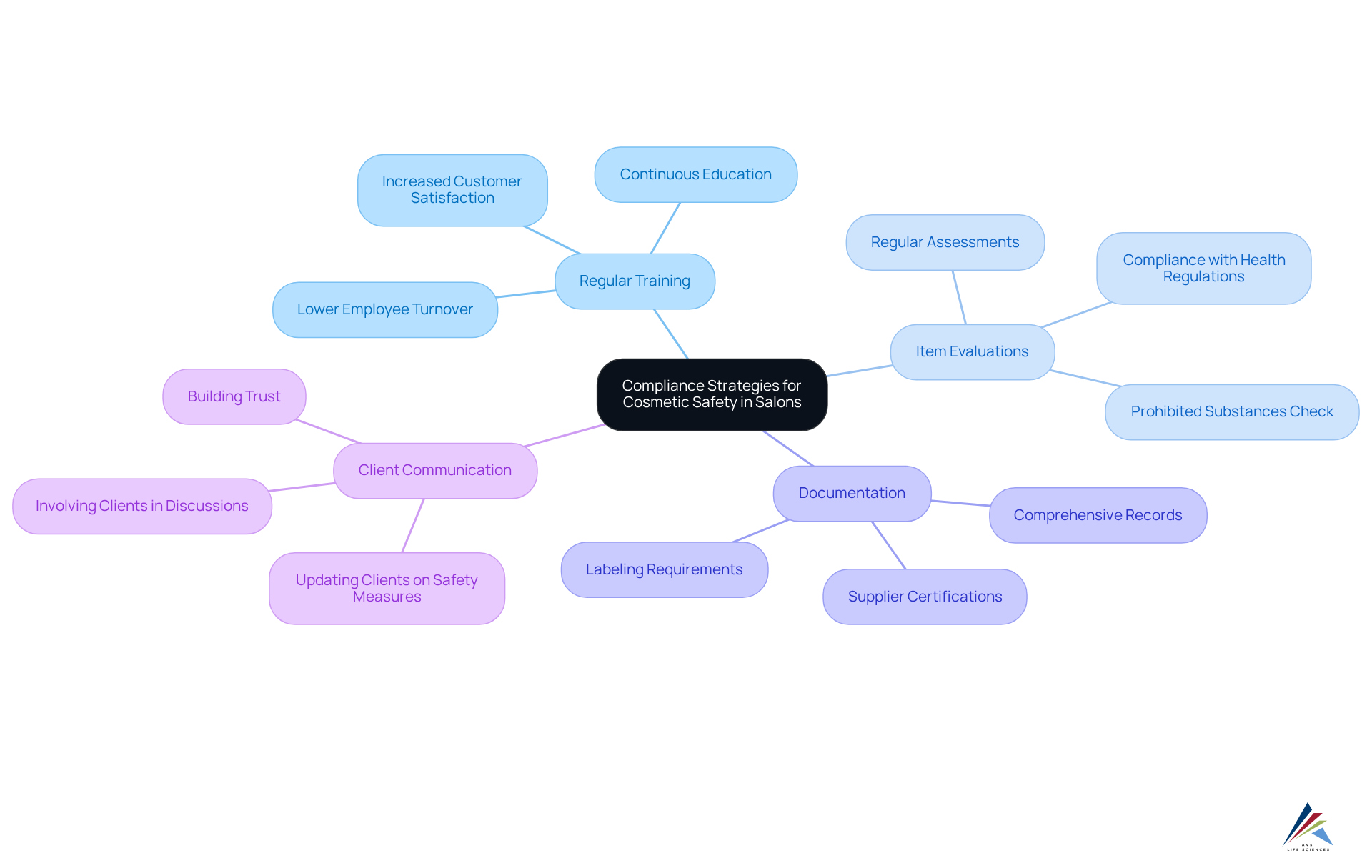
Regular training is essential, with ongoing sessions for all staff on the latest salon worker cosmetic safety law and best practices. Research indicates that establishments with strong training initiatives report a 30% lower employee turnover rate, underscoring the importance of continuous education in maintaining compliance and enhancing service quality. Furthermore, businesses prioritizing customer experience see a 20% increase in customer satisfaction, highlighting the role of training in improving client interactions.
- Item Evaluations: Regular assessments and inspections of items utilized in the salon are crucial to guarantee compliance with health regulations and to ensure they are devoid of prohibited substances, such as heavy metals like lead, cadmium, and mercury, which are restricted in many states. This practice is vital for both compliance and client protection.
- Documentation: Comprehensive records of all items utilized, including data sheets regarding security and supplier certifications, must be maintained. This documentation is critical for demonstrating compliance during inspections and mitigating risks associated with non-compliance. It is also imperative that item labels include necessary information, such as the Country of Origin (COO) mark, to meet regulatory requirements.
- Client Communication: Building trust and openness with clients by updating them on the protective measures implemented and the items being utilized is essential. Involving clients in discussions regarding product security not only enhances their experience but also reinforces the establishment's commitment to health and protection.
By implementing these strategies, salon workers can foster a safer environment while ensuring compliance with the salon worker cosmetic safety law.
Conclusion
Understanding and mastering cosmetic safety laws is essential for salon workers striving for compliance success. The importance of being aware of key regulations, such as the Federal Food, Drug, and Cosmetic Act and the Toxic-Free Cosmetics Act, cannot be overstated. These laws not only protect consumers but also safeguard salon employees from harmful chemicals. By adhering to these regulations, salon professionals can create a safer and healthier environment for both themselves and their clients.
Critical elements of compliance include:
- Ingredient safety
- Labeling requirements
- Necessity of regular training
Implementing effective compliance strategies—such as:
- Item evaluations
- Thorough documentation
- Transparent client communication
is vital. These practices ensure adherence to legal standards while enhancing customer satisfaction and trust.
Ultimately, prioritizing cosmetic safety laws transcends mere legal obligation; it embodies a commitment to the well-being of everyone involved in the salon experience. By fostering a culture of safety and compliance, salon workers can contribute to a healthier beauty industry, paving the way for a future where both professionals and clients can thrive without the risk of toxic exposure. Embracing these practices is a crucial step toward achieving compliance success and promoting a safer beauty environment.
Frequently Asked Questions
What is the purpose of the salon worker cosmetic safety law?
The salon worker cosmetic safety law is designed to protect both consumers and salon employees from harmful chemicals found in beauty products.
What is the Federal Food, Drug, and Cosmetic Act (FDCA)?
The FDCA is a fundamental regulation that governs the safety of beauty products in the United States.
What are the key regulations that salon workers must be aware of?
Salon workers must be aware of ingredient safety, labeling requirements, and the role of regulatory authorities.
What does ingredient safety entail?
Ingredient safety requires that all cosmetic products must be safe for use and not contain harmful chemicals that could pose health risks.
What are the labeling requirements for cosmetic products?
Products must be accurately labeled, providing a comprehensive list of all ingredients to inform consumers and professionals about what they are using.
Who oversees beauty product standards?
The FDA oversees beauty product standards, but state regulations may also apply, adding another layer of compliance for beauty professionals.
How can salon workers benefit from understanding cosmetic safety laws?
By familiarizing themselves with the salon worker cosmetic safety law, salon workers can navigate the complexities of beauty safety standards, fostering a safer working environment.