
10 Essential Steps in the Computer System Validation Lifecycle

Introduction
The intricate landscape of the pharmaceutical and biotechnology industries necessitates rigorous adherence to regulatory standards, particularly regarding computer system validation (CSV). This essential process not only guarantees that systems function as intended but also protects product quality and patient safety amidst the growing scrutiny and complexity in biopharmaceuticals.
As organizations confront the challenge of navigating the CSV lifecycle, it is imperative to explore the essential steps that enhance compliance and operational integrity.
What are the key phases and best practices that can elevate validation from a mere requirement to a strategic advantage?
AVS Life Sciences: Comprehensive Validation Services for Lifecycle Management
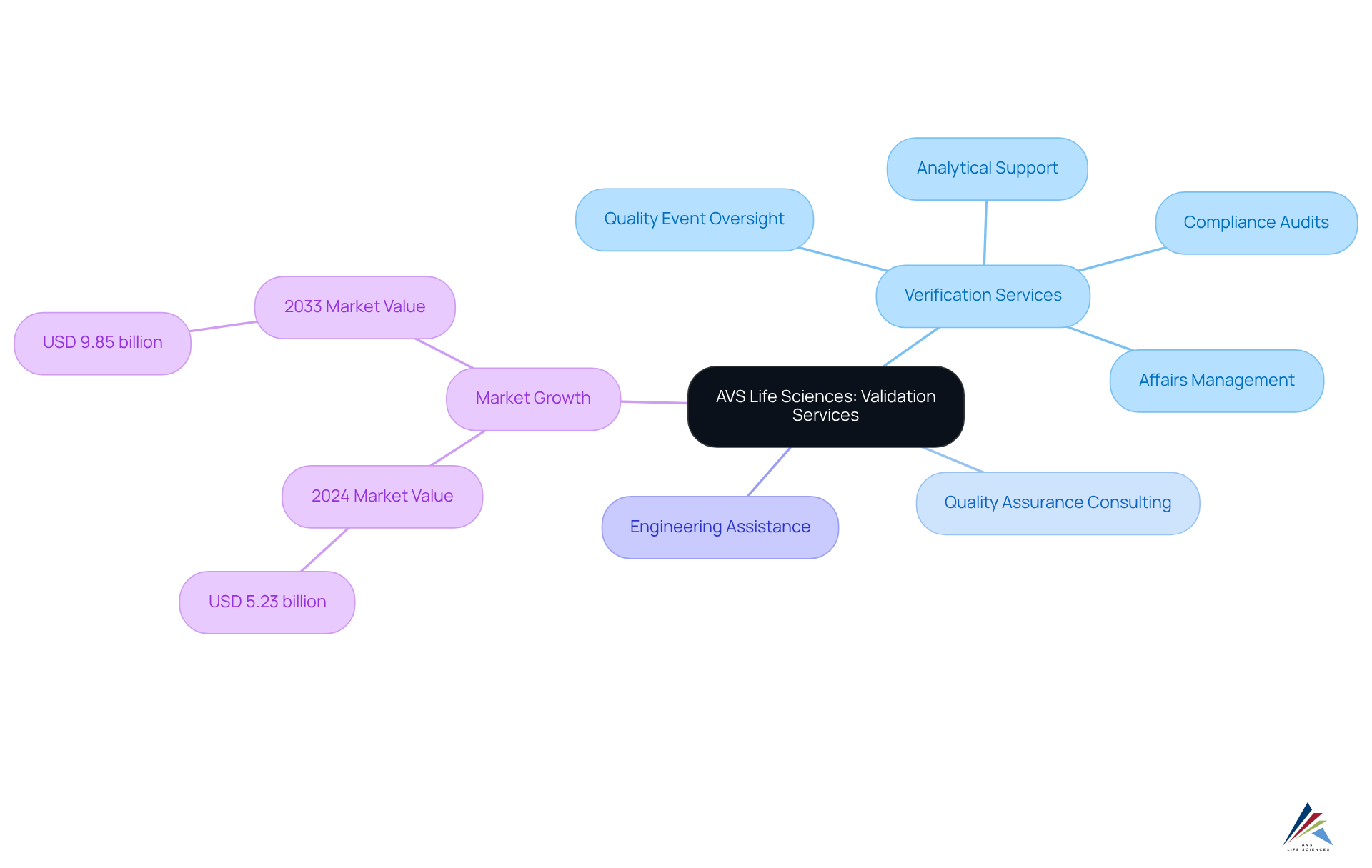
offers a comprehensive suite of tailored for the pharmaceutical and biotechnology sectors. These services encompass verification and commissioning, , and engineering assistance, all meticulously designed to ensure that clients adhere to stringent legal standards throughout the product lifecycle. This includes essential services such as analytical support, affairs management, quality event oversight, and , which are vital for maintaining during the .
The significance of these services is highlighted by the projected growth of the , expected to rise from USD 5.23 billion in 2024 to USD 9.85 billion by 2033, representing a compound annual growth rate (CAGR) of 7.3% from 2026 to 2033. This expansion is driven by and the growing complexity of biopharmaceuticals, underscoring the need for specialized verification expertise.
distinguishes itself as a trusted partner, leveraging innovation and a client-centric approach to navigate the complex . Their unwavering commitment to not only enhances operational efficiency but also equips clients for success in a competitive landscape. Engaging with means embracing a future where compliance is not just a requirement but a pathway to excellence.
Define Computer System Validation: Key Concepts and Importance
The is a structured and recorded procedure that ensures a computing setup reliably meets its intended functions. This process is crucial for upholding adherence to standards, particularly FDA 21 CFR Part 11, which oversees electronic records and signatures. By ensuring , CSV plays a pivotal role in mitigating risks associated with software failures, thereby protecting product quality and patient safety.
The verification process in the includes:
- Detailed documentation
- Incorporating compliance with
- Creation of
These steps ensure that systems function as intended—a necessity in the highly regulated life sciences sector.
As the market for CSV is projected to grow significantly, with an expected value of USD 14.02 billion by 2037, the importance of adhering to these standards cannot be overstated. Real-world examples demonstrate that organizations adopting strong CSV practices not only boost but also enhance operational efficiency and decrease the chances of expensive penalties.
To effectively navigate the complexities of the , organizations should prioritize incorporating into their verification processes, ensuring a thorough approach to .

Outline the Phases of the Computer System Validation Lifecycle
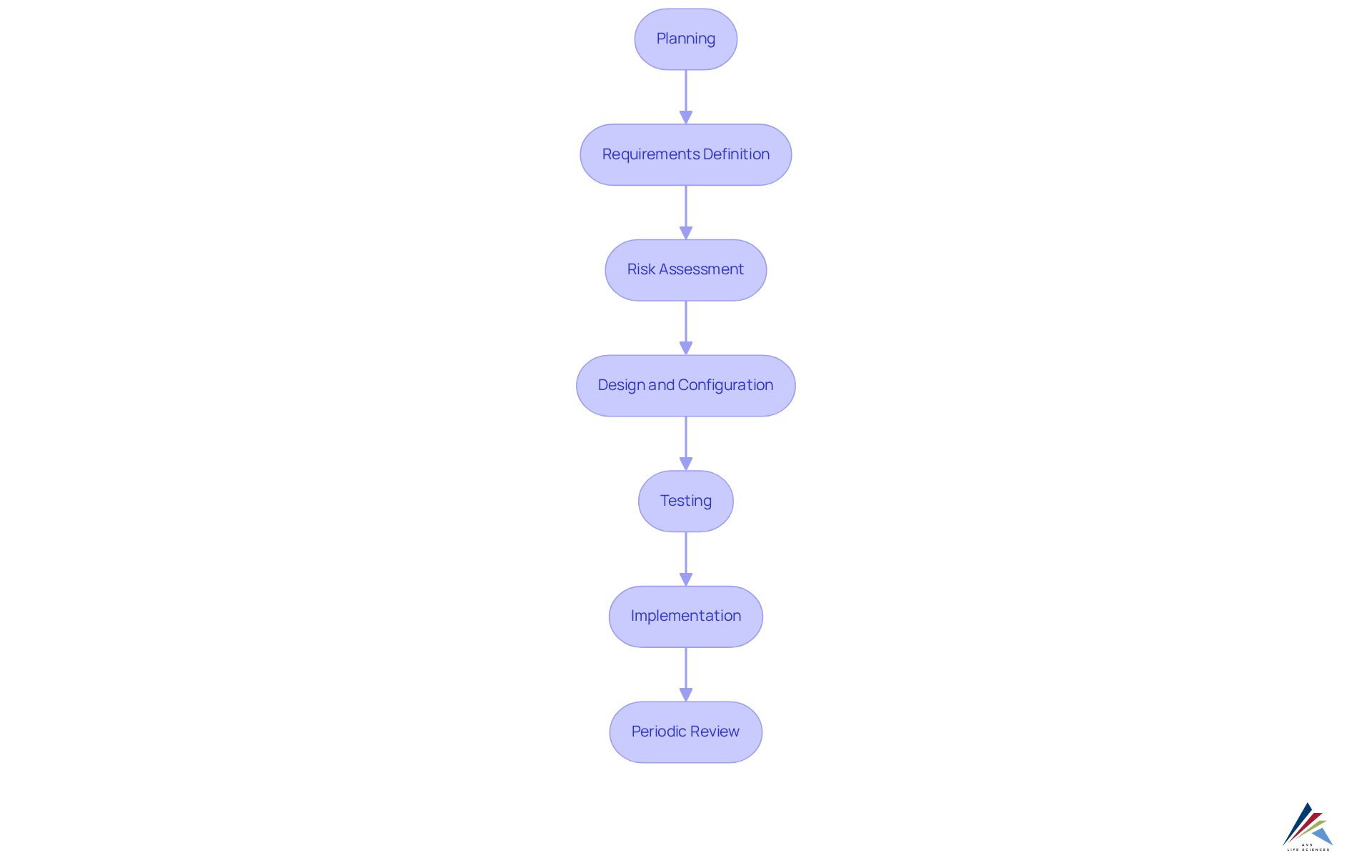
The lifecycle encompasses several critical phases that ensure compliance and operational integrity in pharmaceutical environments. These phases include:
- Planning: Creating a master plan for verification that outlines the scope, objectives, responsibilities, and resources, ensuring a comprehensive approach to assessment. Engaging with vendors early in the process can provide valuable insights into their .
- Requirements Definition: Identifying user needs and functional specifications (URS and FRS), which are essential for aligning the setup with stakeholder expectations.
- Risk Assessment: Evaluating potential risks linked to the framework, focusing on their impact on product quality, , and patient safety. This phase should prioritize based on identified risks.
- Design and Configuration: Developing the framework according to the established specifications, ensuring that all components meet .
- Testing: Conducting to validate that the system operates as intended under real-world conditions. This multi-step process is essential, as it permits quality checks after each verification step, ensuring adherence to FDA regulations and GXP standards. The FDA defines software validation as "Confirmation, by inspection and the presentation of tangible evidence, that the software specifications comply with the purposes and planned uses of the user and that the specific requirements implemented through software can consistently meet their obligations."
- Implementation: Launching the validated setup into production, with suitable procedures and training established to guarantee adherence.
- : Regularly evaluating the framework to uphold continuous compliance and performance, which is vital for adjusting to changing regulatory requirements. Additionally, establishing a comprehensive audit trail is critical for monitoring throughout the lifecycle.
Each phase of the is interconnected, making careful documentation and adherence to essential to ensure the validated state of the framework throughout its lifecycle. Frequent revisions to training resources are essential to conform with changing regulations and , and a retirement strategy for the framework should be created to guarantee proper decommissioning at the conclusion of its useful life.
Conduct Risk Assessment: Identifying and Mitigating Potential Issues
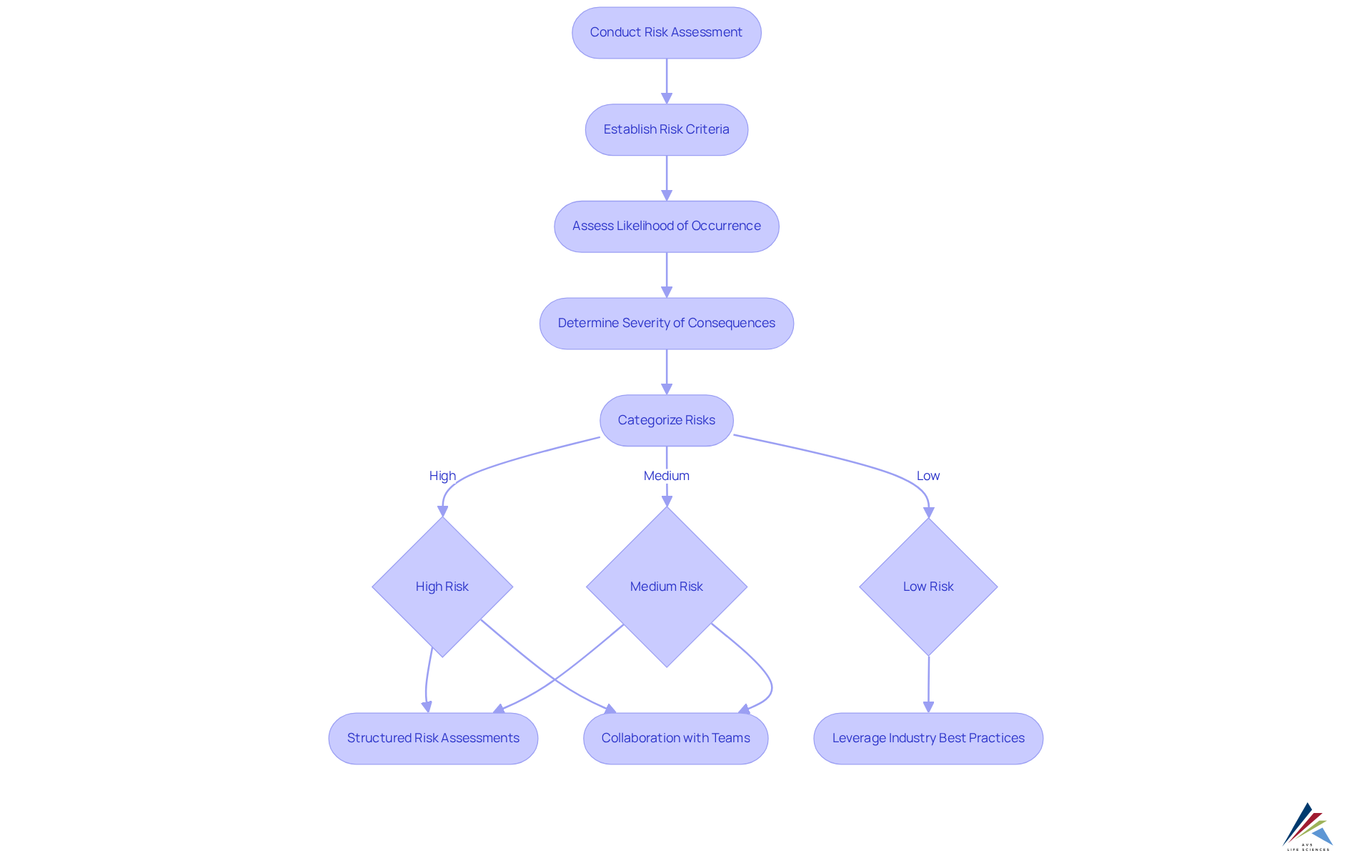
Conducting a comprehensive is crucial for identifying potential hazards associated with the and evaluating their operational impact. This process involves establishing clear risk criteria, assessing the likelihood of occurrence, and determining the severity of potential consequences. Risks should be categorized into high, medium, and low based on their impact on data integrity, patient safety, or product quality. By prioritizing risks, organizations can effectively allocate resources to address issues proactively, thereby . This guarantees that vital areas receive concentrated attention, ultimately enhancing success rates in assessment.
Effective methods for identifying risks include:
- Collaboration with cross-functional teams
- Leveraging industry best practices
Involving all relevant departments from the earliest stages of a project can prevent last-minute changes. Furthermore, employing strong , such as regular audits and ongoing monitoring, can greatly diminish the chances of and improve overall system integrity. The emphasizes the importance of the , recommending the use of sound statistical methods for continuous process verification and further supporting the need for a structured approach.
For organizations looking for , AVS Life Sciences provides extensive support and resources to ensure successful Computer System Confirmation, including a .
Establish Documentation Standards: Ensuring Compliance and Traceability
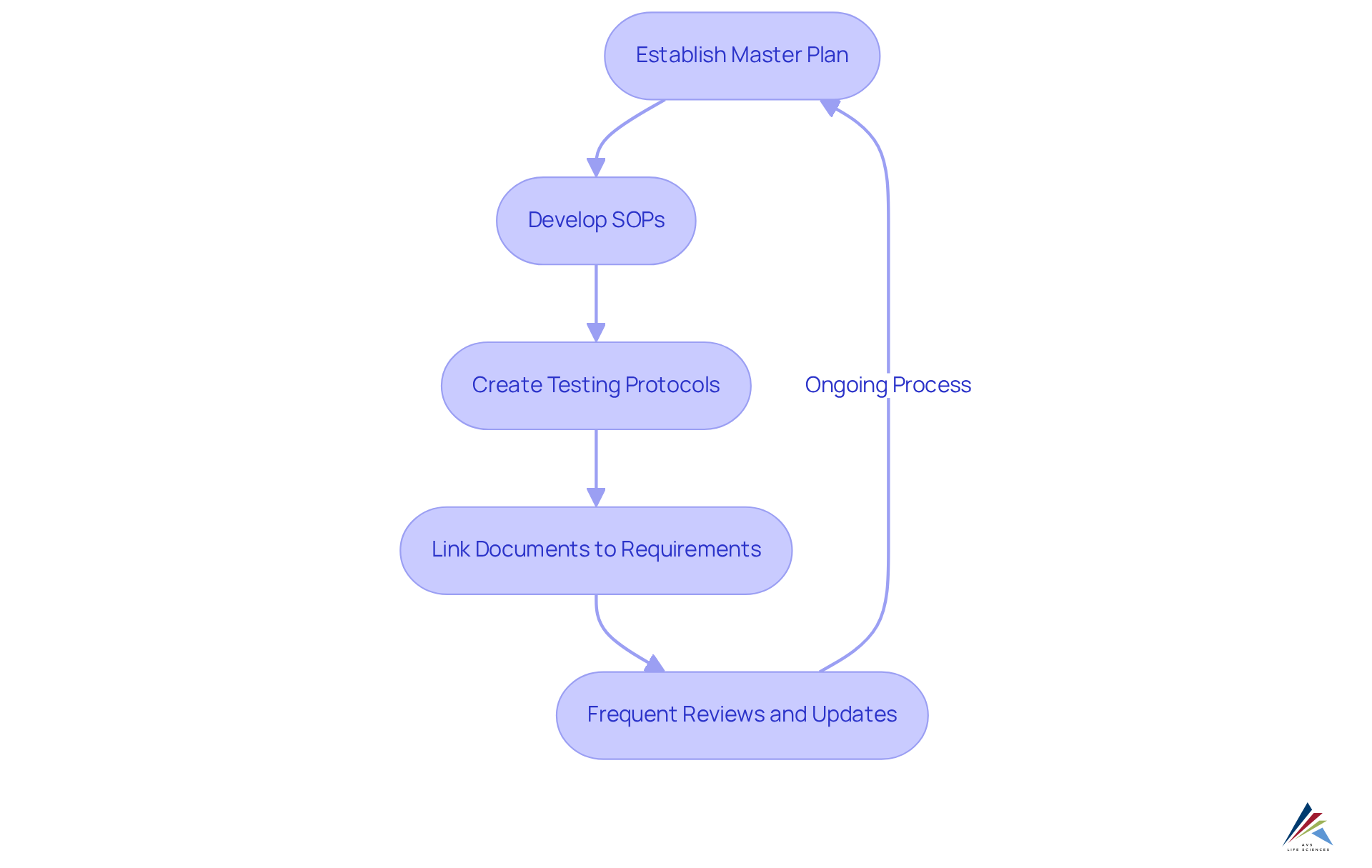
Establishing robust documentation standards is vital for ensuring compliance with in the life sciences sector. This necessity entails the development and upkeep of a master plan for verification, , and detailed testing protocols. Each document must clearly outline the , including objectives, methodologies, and results.
; all documentation should link back to , demonstrating that the system meets its intended use. In fact, 83% of risk and regulatory professionals view upholding adherence to laws, policies, and regulations as crucial in their decision-making processes. Proper documentation not only facilitates audits but also supports .
Organizations with can of . Optimal methods in compliance documentation involve frequent reviews and updates to guarantee alignment with changing standards. Successful execution of SOPs in the can significantly enhance traceability, ensuring that all verification activities are documented and easily retrievable, thereby reinforcing the integrity of the verification process.
Implement Training Programs: Ensuring Competency in Validation Practices
Establishing thorough training initiatives is crucial for ensuring that staff engaged in the assessment process possess the necessary skills and understanding of and optimal methods. Key topics for training should encompass:
Regular refresher courses and are essential for reinforcing skills and keeping staff informed about the latest industry developments. Organizations that foster a culture of not only enhance their verification efforts but also significantly improve adherence to evolving regulations. In fact, companies with robust report a 17% increase in productivity and a 218% higher income per employee compared to those lacking formalized training. By prioritizing , organizations can adeptly navigate the complexities of , ensuring that their meet the highest standards.

Manage Changes: Implementing Effective Change Control Procedures
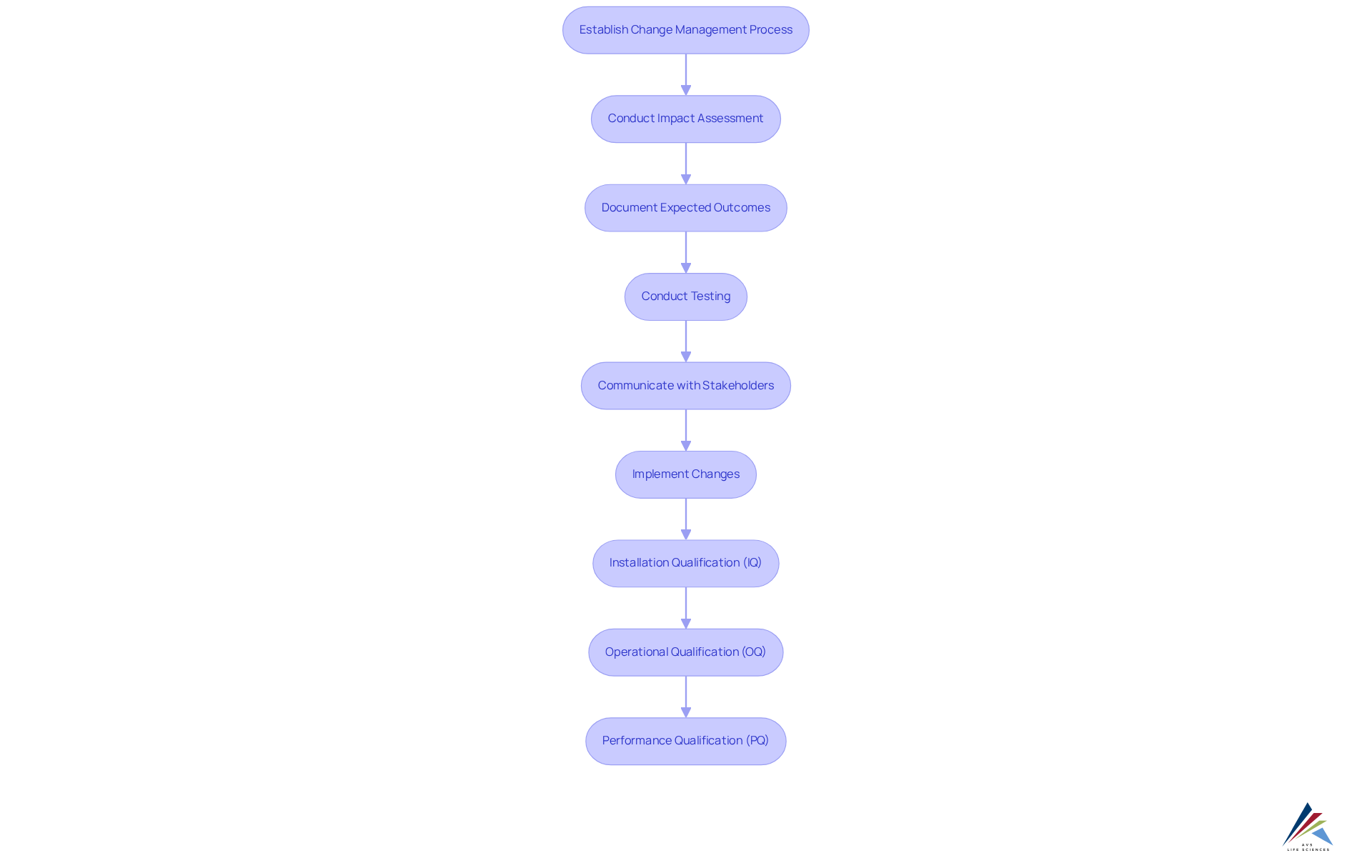
Implementing robust procedures is essential for preserving the integrity of validated frameworks within the in the life sciences. Organizations must establish a formal that includes a comprehensive impact assessment of proposed modifications within the . This involves documenting expected outcomes and conducting rigorous testing prior to implementation. is crucial, ensuring that all relevant parties are informed and engaged throughout the process. By adhering to a strict framework, organizations can protect the validated condition of their processes within the , thus ensuring .
The stages of the —including Installation Qualification (IQ), Operational Qualification (OQ), and Performance Qualification (PQ)—emphasize the necessity of thorough testing and documentation in preserving integrity. As noted by industry leaders, the , making it imperative for organizations to embrace to thrive in a competitive landscape.
through successful initiatives, such as the enhancement of a biotechnology , where effective and and operational success. By adopting these practices, organizations not only comply with regulatory standards but also position themselves for sustained growth and excellence in the life sciences sector.
Conduct Periodic Reviews: Maintaining Compliance Over Time
Frequent evaluations of computer networks are indispensable for and ensuring with legal requirements. empower organizations to assess system performance, confirm adherence to , and identify any modifications since the last evaluation. Establishing a well-organized timetable for these assessments is crucial, with documentation serving as a fundamental component of . Statistics indicate that numerous regulatory issues surface during these reviews, underscoring the and corrective actions to mitigate risks. By implementing over time, organizations can protect and patient safety, thereby reinforcing their .

Leverage Technology: Enhancing Validation Through Automation
Leveraging technology, particularly , significantly enhances the efficiency of the . AVS Life Sciences exemplifies this by incorporating that consolidate key process parameters. This innovation enables operators to focus on rather than . Automated systems streamline documentation, testing, and reporting, effectively reducing the time and effort required for manual tasks.
For instance, organizations employing automation have noted up to a alongside a substantial decline in errors—an essential factor for maintaining . Furthermore, automation , thereby minimizing the risk of human error.
By integrating advanced technologies into the , such as transitioning from a Biosafety Level 1 to a Level 2 , organizations can refine their processes, ensure adherence to regulations, and concentrate on strategic initiatives that foster innovation.

Understand Regulatory Requirements: Navigating Compliance Standards
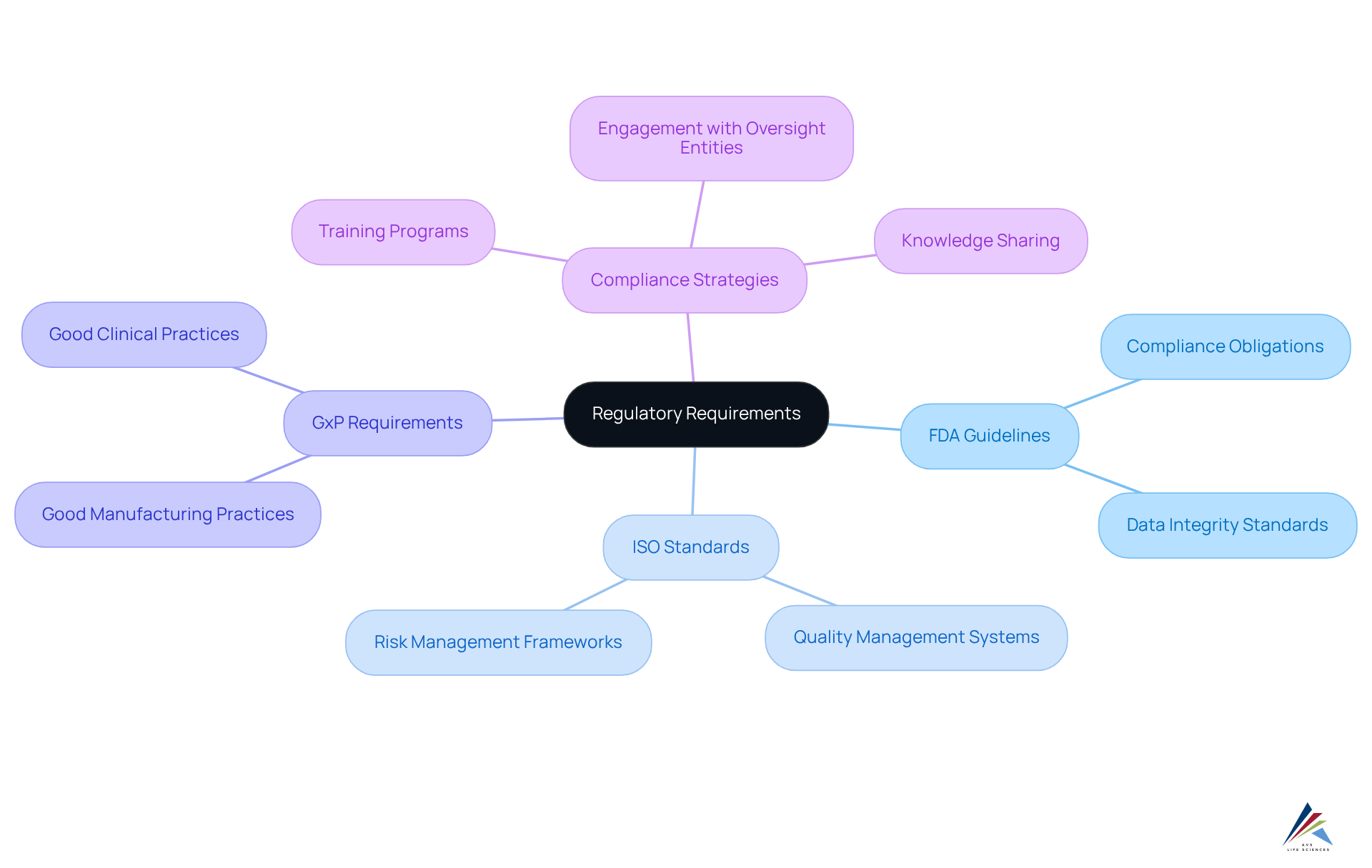
Grasping compliance obligations is essential for effective computer system verification. Organizations must stay informed about relevant regulations, including , , and . Consistent training and updates on rule changes are vital for guaranteeing adherence; firms that implement a strong lifecycle have observed a remarkable 35% enhancement in adherence rates. By proactively addressing compliance expectations, organizations can mitigate risks associated with non-conformity and enhance their overall efforts within the .
As the market is projected to reach $9,457.96 million by 2032, the growing significance of adherence in the industry cannot be overstated. Engaging with oversight entities and industry associations offers valuable insights into best practices and emerging trends, assisting organizations in navigating the complexities of diverse regulations. To further strengthen their compliance efforts, organizations should consider establishing and participating in industry forums to share knowledge and strategies.
can provide , ensuring that organizations are well-equipped to meet and achieve successful validation outcomes.
Conclusion
The computer system validation lifecycle represents a crucial framework that guarantees the reliability and integrity of computing systems within the highly regulated pharmaceutical and biotechnology sectors. By adhering to structured processes and stringent standards, organizations can effectively mitigate risks, enhance compliance, and ultimately safeguard product quality and patient safety.
Key steps in the validation lifecycle have been outlined, including:
- Planning
- Risk assessment
- Documentation
- The critical importance of implementing robust training and change control procedures
Each phase plays a vital role in maintaining a validated state, ensuring that systems not only meet regulatory requirements but also operate efficiently in real-world conditions. The emphasis on leveraging technology and automation further underscores the potential for increased accuracy and reduced operational burdens.
In a landscape where regulatory scrutiny is intensifying and the stakes are high, the significance of a comprehensive approach to computer system validation cannot be overstated. Organizations are strongly encouraged to prioritize ongoing education, engage with industry best practices, and consider partnering with experts like AVS Life Sciences to navigate the complexities of compliance. By doing so, they can not only meet current standards but also position themselves for future success in a rapidly evolving industry.
Frequently Asked Questions
What services does AVS Life Sciences offer?
AVS Life Sciences offers a comprehensive suite of verification services tailored for the pharmaceutical and biotechnology sectors, including verification and commissioning, quality assurance consulting, and engineering assistance.
Why are the services provided by AVS Life Sciences important?
These services are crucial for ensuring adherence to stringent legal standards throughout the product lifecycle, maintaining quality and compliance during the drug development process, and addressing increasing regulatory scrutiny in the industry.
What is the projected growth of the Global Pharmaceutical Validation Services Market?
The market is expected to grow from USD 5.23 billion in 2024 to USD 9.85 billion by 2033, with a compound annual growth rate (CAGR) of 7.3% from 2026 to 2033.
What is computer system validation (CSV)?
Computer system validation is a structured procedure that ensures a computing setup reliably meets its intended functions, crucial for adhering to standards such as FDA 21 CFR Part 11, which oversees electronic records and signatures.
What are the key components of the computer system validation lifecycle?
The key components include thorough testing, detailed documentation, compliance with Good Practice (GXP) standards, and the creation of Standard Operating Procedures (SOPs).
What are the phases of the computer system validation lifecycle?
The phases include: - Planning - Requirements Definition - Risk Assessment - Design and Configuration - Testing - Implementation - Periodic Review
What is the significance of the testing phase in the computer system validation lifecycle?
The testing phase includes installation qualification (IQ), operational qualification (OQ), and performance qualification (PQ), ensuring that the system operates as intended and adheres to FDA regulations and GXP standards.
How does the computer system validation lifecycle contribute to product quality and patient safety?
By ensuring data integrity and compliance with regulatory standards, the CSV lifecycle mitigates risks associated with software failures, thereby protecting product quality and patient safety.
What should organizations prioritize to effectively navigate the complexities of the computer system validation lifecycle?
Organizations should prioritize incorporating GXP standards into their verification processes to ensure a thorough approach to quality management and regulatory adherence.
Why is documentation important in the computer system validation lifecycle?
Careful documentation is essential to ensure the validated state of the framework throughout its lifecycle and to maintain compliance with changing regulations and best practices.
List of Sources
- AVS Life Sciences: Comprehensive Validation Services for Lifecycle Management
- Pharmaceutical Validation Services Market By Size, Share & Forecast 2030F | TechSci Research (https://techsciresearch.com/report/pharmaceutical-validation-services-market/16784.html)
- coherentmarketinsights.com (https://coherentmarketinsights.com/industry-reports/bioprocess-validation-market)
- Pharmaceutical Validation Services Market Size, Consumer Behavior & Forecast 2033 (https://verifiedmarketreports.com/product/pharmaceutical-validation-services-market)
- archivemarketresearch.com (https://archivemarketresearch.com/reports/pharmaceutical-validation-services-54368)
- Define Computer System Validation: Key Concepts and Importance
- coherentmarketinsights.com (https://coherentmarketinsights.com/market-insight/computer-system-validation-market-5716)
- researchnester.com (https://researchnester.com/reports/computer-system-validation-market/5839)
- azquotes.com (https://azquotes.com/quotes/topics/computer-systems.html)
- goodreads.com (https://goodreads.com/quotes/10030983-the-importance-of-what-computer-scientists-call-validation-whereas-verification)
- Outline the Phases of the Computer System Validation Lifecycle
- usvalidation.com (https://usvalidation.com/kb/comp_lifecycle.aspx)
- cfpie.com (https://cfpie.com/computer-system-validation-training-best-practices-for-successful-implementation)
- sware.com (https://sware.com/blog/what-is-computer-system-validation)
- pharmuni.com (https://pharmuni.com/glossary/computer-validation-lifecycle)
- Conduct Risk Assessment: Identifying and Mitigating Potential Issues
- ellab.com (https://ellab.com/blog/what-you-need-to-know-about-a-risk-based-csv-approach)
- Statistic Based Verification on Computer System Validation (https://gxp-cc.com/insights/blog/statistic-based-verification-on-computer-system-validation)
- thefdagroup.com (https://thefdagroup.com/blog/computer-system-validation)
- jafconsulting.com (https://jafconsulting.com/blog/understanding-risk-based-approaches-to-computer-system-validation-csv)
- pharmaconnections.in (https://pharmaconnections.in/risk-assessment-in-computer-computer-system-validation)
- Establish Documentation Standards: Ensuring Compliance and Traceability
- 4 reasons why documentation is important in healthcare - 'Think with your ink' (https://scphealth.com/blog/think-with-your-ink-4-reasons-why-proper-medical-record-documentation-is-vital)
- 115 Compliance Statistics You Need To Know in 2023 - Drata (https://drata.com/blog/compliance-statistics)
- 130+ Compliance Statistics & Trends to Know for 2026 (https://secureframe.com/blog/compliance-statistics)
- 24 Stats Every Chief Compliance Officer Should Know in 2024 (https://complianceandrisks.com/blog/24-stats-every-chief-compliance-officer-should-know-in-2024)
- Key Compliance Statistics & Insights For 2025 | Zluri (https://zluri.com/blog/key-compliance-statistics-and-insights-for-2024)
- Implement Training Programs: Ensuring Competency in Validation Practices
- Employee Training Statistics, Trends, and Data in 2025 | Devlin Peck (https://devlinpeck.com/content/employee-training-statistics)
- itdworld.com (https://itdworld.com/blog/human-resources/training-quotes-inspirational)
- 2026 Training Industry Statistics: Data, Trends & Predictions | Research.com (https://research.com/careers/training-industry-statistics)
- 62 Software testing quotes to inspire you (https://globalapptesting.com/blog/software-testing-quotes)
- Manage Changes: Implementing Effective Change Control Procedures
- 40 Change Management Quotes to Inspire the Entire Team (https://ca.indeed.com/career-advice/career-development/change-management-quotes)
- Change Management Statistics You Need to Know in 2024 (https://walkme.com/blog/change-management-statistics)
- 30 Change Management Statistics (https://blog.invgate.com/change-management-statistics)
- 50 Inspiring Quotes About Change Management (https://deliberatedirections.com/change-management-quotes)
- Conduct Periodic Reviews: Maintaining Compliance Over Time
- gmp-compliance.org (https://gmp-compliance.org/gmp-news/maintaining-laboratory-computer-validation-how-to-conduct-periodic-reviews)
- thefdagroup.com (https://thefdagroup.com/blog/computer-system-validation)
- learngxp.com (https://learngxp.com/csv-intermediate/factors-determining-the-frequency-of-periodic-reviews-video)
- processx.com (https://processx.com/resources/blogs/mastering-periodic-review-in-gxp-environments)
- learngxp.com (https://learngxp.com/computer-system-validation-csv/computer-system-validation-periodic-review)
- Leverage Technology: Enhancing Validation Through Automation
- numberanalytics.com (https://numberanalytics.com/blog/process-automation-finance-stats)
- RPA Reloaded: 50+ Robotic Process Automation Statistics to Know in 2025 (https://flobotics.io/blog/rpa-statistics)
- moldstud.com (https://moldstud.com/articles/p-ensuring-accuracy-through-data-validation-testing)
- Compelling Workflow Automation Statistics for Data-driven Business Decisions (https://cflowapps.com/workflow-automation-statistics)
- Business Process Automation Stats for 2026 (https://kissflow.com/workflow/bpm/business-process-automation-statistics)
- Understand Regulatory Requirements: Navigating Compliance Standards
- grip.globalrelay.com (https://grip.globalrelay.com/duly-noted-quotes-quips-from-a-year-in-enforcement-and-regulation)
- credenceresearch.com (https://credenceresearch.com/report/computer-system-validation-market)
- metastatinsight.com (https://metastatinsight.com/report/computer-system-validation-market)
- numberanalytics.com (https://numberanalytics.com/blog/stats-regulatory-analytics-boost-healthcare-safety)
- moldstud.com (https://moldstud.com/articles/p-the-impact-of-regulatory-changes-on-the-healthcare-software-development-lifecycle)