
Understanding the Marketing Authorization Holder's Role in Pharma Compliance

Introduction
The pharmaceutical landscape is governed by a complex web of regulations designed to ensure that products are safe, effective, and of high quality. At the heart of this framework lies the marketing authorization holder (MAH), a pivotal entity responsible for navigating these stringent compliance requirements. This article delves into the multifaceted role of the MAH, highlighting its critical responsibilities in maintaining product integrity and public health. However, as regulations evolve and the industry faces new challenges, what does it truly mean to be an effective marketing authorization holder in today's dynamic environment?
Define Marketing Authorization Holder (MAH)
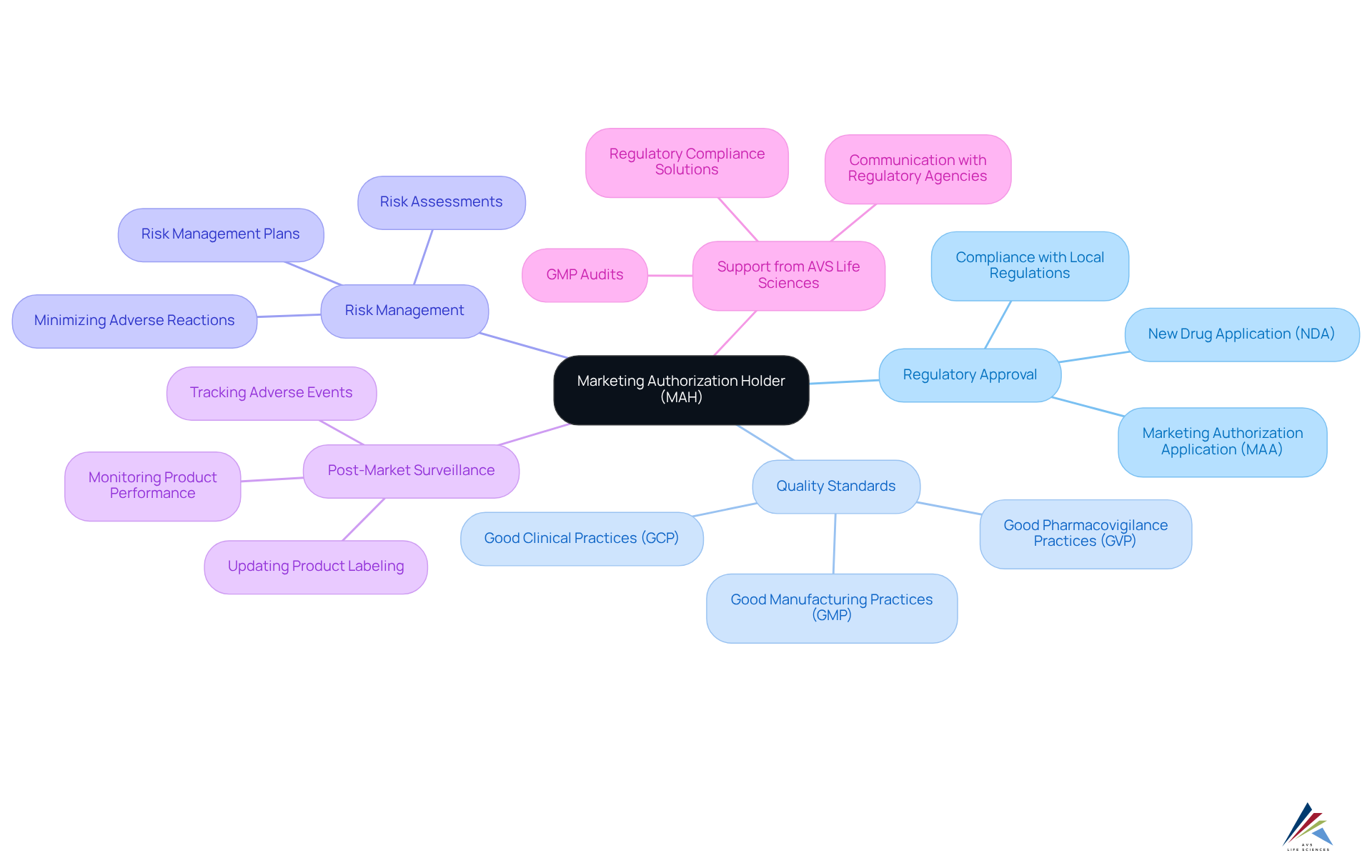
A is a legal entity—whether an individual, company, or non-profit organization—that has received regulatory approval to market and distribute a pharmaceutical product. This authorization, granted by national or regional regulatory authorities, empowers the marketing authorization holder to ensure that the item adheres to stringent safety, efficacy, and quality standards throughout its lifecycle. The plays a crucial role in ensuring adherence to relevant regulations, such as and Quality System Regulations (QSR).
, a prominent provider of quality management and regulatory compliance solutions, supports MAHs by conducting across various facilities, including API and drug formulations CMOs, contract test labs, and storage and distribution sites. This duty is vital for preserving the integrity of pharmaceutical items in the market, as the marketing authorization holder must perform comprehensive risk evaluations and execute to reduce adverse reactions.
Moreover, the marketing authorization holder is responsible for , which includes observing the item’s performance, tracking adverse events, and ensuring ongoing patient safety. The effectiveness of the MAH system has been underscored by its implementation in China, where it has significantly enhanced innovation within the pharmaceutical sector since its pilot in 2016. By overseeing compliance-driven projects and maintaining open communication with regulatory agencies, the marketing authorization holder ensures that pharmaceutical offerings remain safe and effective, ultimately protecting public health.
Outline Responsibilities of a Marketing Authorization Holder
The responsibilities of a Marketing Authorization Holder (MAH) are extensive and encompass several key areas:
- : The MAH must secure the necessary approvals to market the item and ensure that these approvals are kept current. This includes filing variations and renewals as part of , which is crucial for sustained market availability.
- : Adherence to , ISO standards, and Quality System Regulations (QSR) is essential. The marketing authorization holder must ensure that all manufacturing processes comply with these regulatory requirements, which is vital for upholding item integrity and safety. This includes ensuring that robust processes are in place, as these are critical for verifying that software and systems operate as intended, thereby supporting compliance with all applicable EU regulations and guidelines.
- : The marketing authorization holder is responsible for observing the item's performance in the market. This encompasses carrying out , reporting adverse occurrences, and ensuring continuous effectiveness and protection. Efficient pharmacovigilance systems improve patient well-being and uphold public confidence in pharmaceutical products.
- Documentation and Reporting: Maintaining comprehensive records related to manufacturing, quality control, and pharmacovigilance is critical. The marketing authorization holder must submit necessary documentation, such as , to , ensuring adherence to EU regulations and guidelines. This documentation should also reflect the outcomes of the CSV process, including Installation Qualification (IQ), Operational Qualification (OQ), and Performance Qualification (PQ) testing results.
- Interaction with : The marketing authorization holder must keep open channels of communication with regulatory bodies to address adherence issues or changes in regulations. This communication is vital for ensuring transparency and facilitating smoother market access.
- : Establishing a quality management system (QMS) is crucial for the marketing authorization holder (MAH) to effectively manage their responsibilities. This organized method guarantees that all regulatory aspects, including those related to CSV, are systematically addressed.
- The marketing authorization holder must have procedures in place to manage quality defects, complaints, and product recalls, which are essential aspects of their role in ensuring product safety and adherence to regulations.
The CSV process includes multiple phases that are crucial for guaranteeing adherence and quality assurance. These stages encompass Planning, Defining User Requirement Specifications (URS), Design Specifications, Building and Configuring a System, Installation Qualification (IQ) testing, Operational Qualification (OQ) testing, and Performance Qualification (PQ) testing. Each stage plays a vital role in validating that the systems and software used in manufacturing and monitoring are functioning correctly and safely.
Statistical data shows that adherence rates among marketing authorization holders are closely monitored, with the European Medicines Agency (EMA) coordinating inspections to verify conformity to standards. The Health Products Regulatory Authority (HPRA) carries out 3-5 Market Inspections each year, demonstrating the strict oversight that marketing authorization holders encounter in maintaining adherence to regulatory standards. Recent updates, including the phased implementation of the Identification of Medicinal Products (IDMP) by the EMA, highlight the evolving landscape of regulatory compliance that marketing authorization holders must navigate. Additionally, Brexit-related guidance is relevant for companies operating in the UK and EU, adding depth to the discussion of regulatory challenges.

Explain the Importance of the Marketing Authorization Holder in Pharmaceuticals
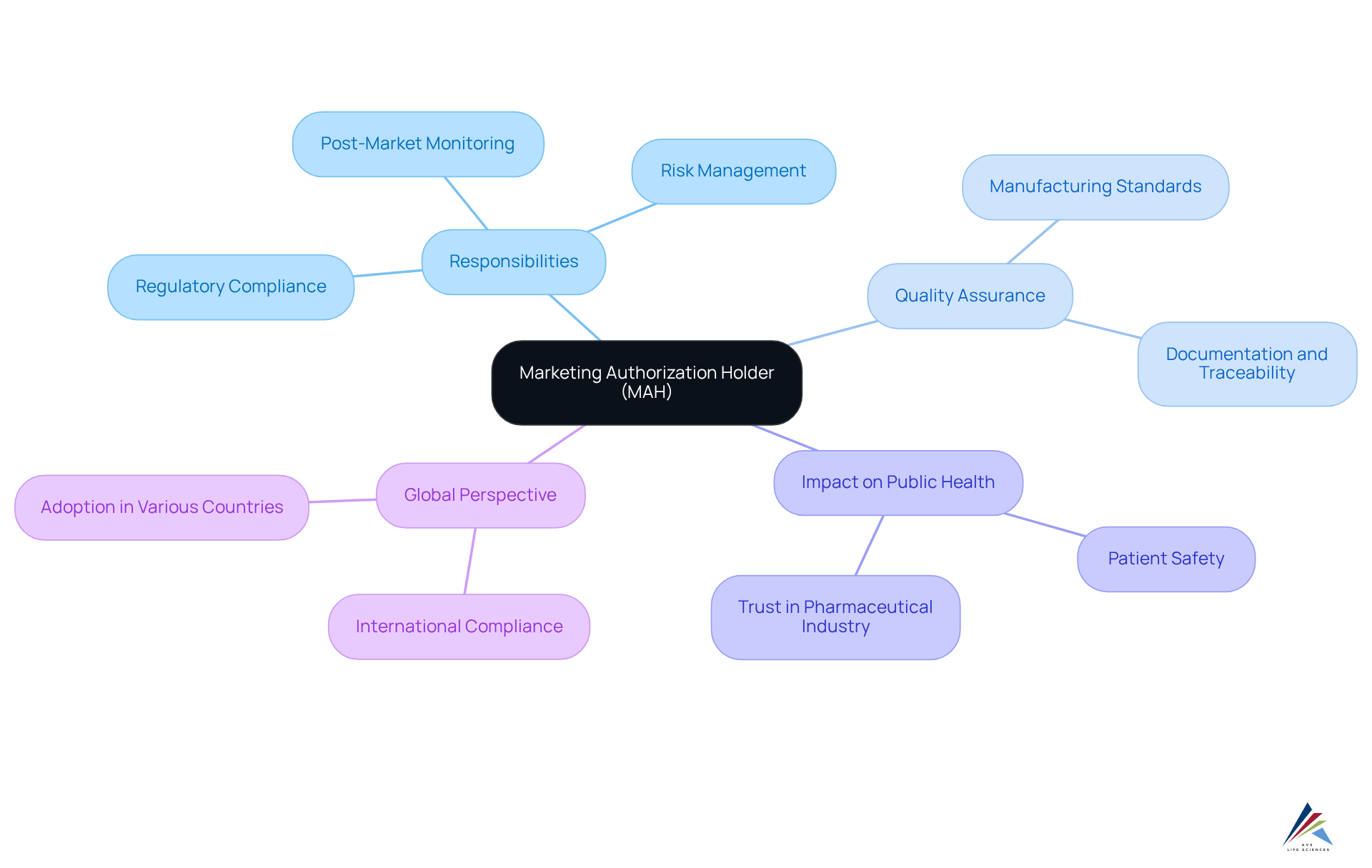
The is integral to the pharmaceutical industry, tasked with ensuring that products are safe, effective, and compliant with . This responsibility directly impacts , as the is responsible for post-market monitoring and must address any emerging issues promptly. When safety concerns arise, the marketing authorization holder is required to communicate swiftly with regulatory authorities and implement necessary changes to mitigate risks. This proactive strategy not only protects patient health but also strengthens the to adhering to evolving regulations, which is crucial for ensuring the availability of safe medications in the market.
A transformative case study involving the critical role of in this context. The company successfully assisted a leading biotechnology firm in upgrading their manufacturing space from a Biosafety Level 1 to a Level 2 . This upgrade ensured compliance with while enhancing the in place. AVS Life Sciences' meticulous documentation efforts demonstrated full traceability, which was crucial for the client’s team. Important lessons were learned regarding test result reliability, particularly when anomalies were discovered due to improperly installed barcode scanner cameras. Such extensive quality management solutions are essential for the marketing authorization holder, as they directly influence the reliability of test results and overall product security.
The effectiveness of the marketing authorization holder in fulfilling these responsibilities can significantly impact a company's reputation and overall success within the industry. Case studies have demonstrated that marketing authorization holders who prioritize stringent protocols and transparent communication enhance their credibility and foster trust among healthcare professionals and patients alike. The marketing authorization holder's role in addressing health concerns is essential; effective have been associated with enhanced public perception and decreased liability for pharmaceutical companies. Overall, the commitment of the marketing authorization holder to regulations and security not only safeguards but also enhances the pharmaceutical industry's reputation, ultimately aiding its long-term sustainability.
The marketing authorization holder system enhances the quality control of drug production by holding marketing authorization holders accountable for the entire supply chain. As noted by Jiajing Li, 'The MAH system has been widely promoted globally, especially in European countries such as Germany, Italy, and Israel.' This global perspective highlights the MAH's importance in ensuring pharmaceutical compliance and protection. Furthermore, the marketing authorization holder is accountable for drug security, performing risk evaluations, and executing , which are essential for upholding public health. By 2019, 3,239 drug items had been approved under the system, marking its success in promoting innovation, as stated by the National Medical Product Administration. The role of the marketing authorization holder encompasses not just adherence to regulations but also cultivating an environment where innovation can flourish while guaranteeing that well-being remains a top priority.
Review Regulatory Framework for Marketing Authorization Holders
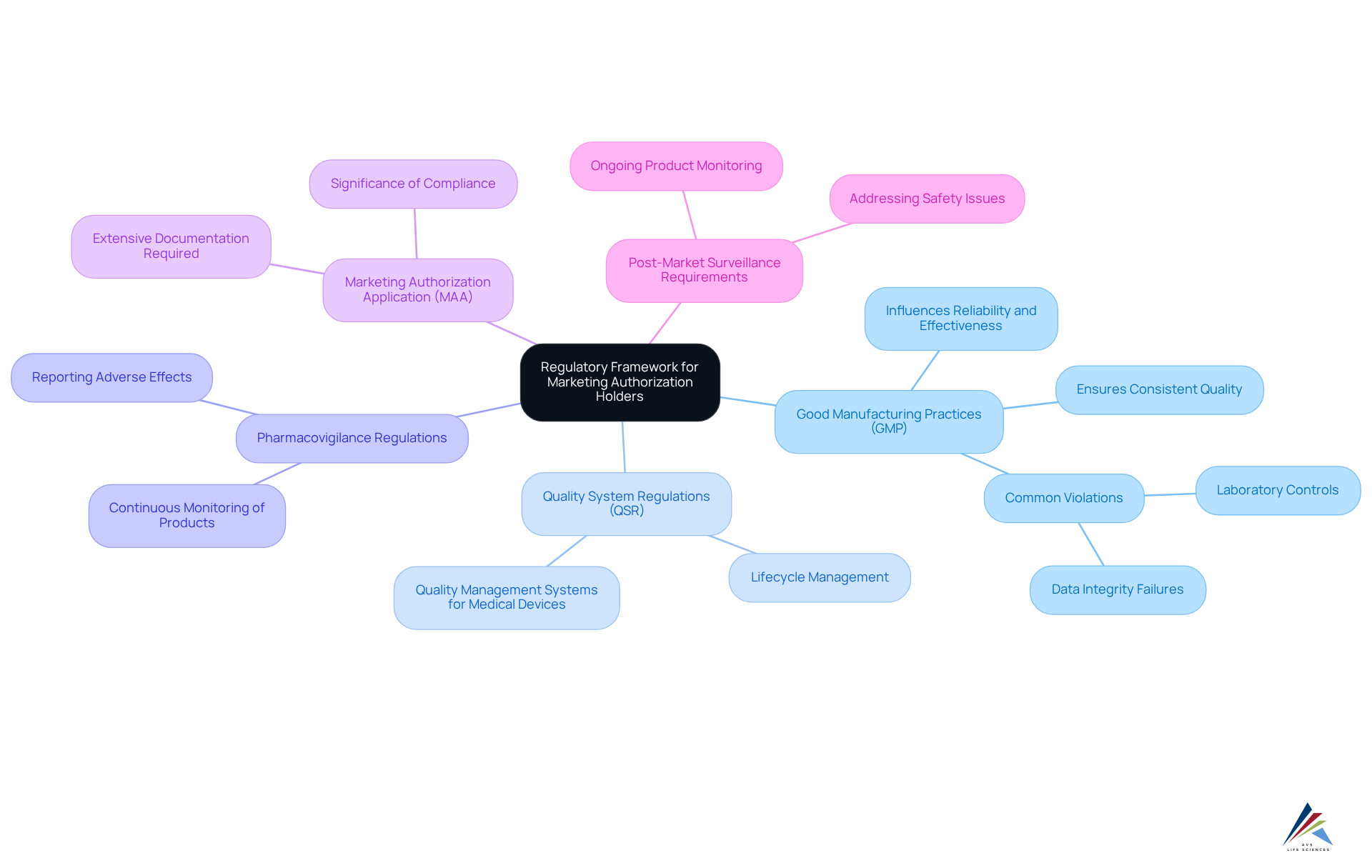
The regulatory framework for marketing authorization holders is shaped by guidelines established by national and international regulatory bodies, notably the European Medicines Agency (EMA) and the U.S. Food and Drug Administration (FDA). Key regulations include:
- : These regulations ensure that items are consistently manufactured and regulated according to established quality standards. Adhering to GMP is essential, as it directly influences the reliability and effectiveness of the items.
- : Specific to medical devices, QSR outlines the requirements for quality management systems, ensuring that manufacturers maintain high standards throughout the lifecycle of the item.
- : The marketing authorization holder (MAH) must oversee the well-being of their items continuously and inform regulatory bodies of any adverse effects, thus .
- : This process entails providing extensive information to regulatory bodies to secure approval for new items, emphasizing the significance of detailed documentation and adherence.
- : These regulations mandate ongoing monitoring of products once they are on the market, ensuring that any safety issues are promptly identified and addressed.
Grasping this regulatory framework is crucial for marketing authorization holders to effectively maneuver through the intricacies of adherence. plays a pivotal role in assisting marketing authorization holders by providing and regulatory adherence solutions tailored to meet these stringent requirements. Recent statistics reveal that more than half of the were associated with CGMP adherence issues, underscoring the essential need for following these regulations. Furthermore, the FDA's Quality Management Maturity (QMM) initiative highlights the significance of embedding quality into all facets of manufacturing, shifting adherence from a reactive requirement to a proactive approach for operational excellence. As the landscape of pharmaceutical regulations evolves, staying informed about updates from the FDA and EMA is vital for marketing authorization holders to maintain compliance and ensure the safety and efficacy of their products.
Conclusion
The role of the marketing authorization holder (MAH) is pivotal in ensuring the safety, efficacy, and regulatory compliance of pharmaceutical products. This legal entity not only secures the necessary approvals for drug marketing but also maintains stringent oversight throughout the product's lifecycle, ensuring adherence to Good Manufacturing Practices (GMP) and Quality System Regulations (QSR). By engaging in robust post-market surveillance and proactive risk management strategies, the MAH plays a crucial part in protecting public health and fostering trust in the pharmaceutical industry.
Key responsibilities of the MAH include:
- Obtaining and maintaining regulatory approvals
- Ensuring compliance with standards
- Conducting thorough documentation and reporting
Effective communication with regulatory authorities and the establishment of quality management systems are essential for navigating the complex regulatory landscape, ensuring that pharmaceutical products remain safe and effective for consumers.
As the pharmaceutical landscape continues to evolve, the importance of the marketing authorization holder cannot be overstated. Their commitment to regulatory adherence and proactive quality management directly influences public health outcomes and the overall reputation of the pharmaceutical industry. Stakeholders are encouraged to recognize the critical role of MAHs and to support initiatives that enhance compliance and innovation, ultimately contributing to a safer and more reliable healthcare environment.
Frequently Asked Questions
What is a Marketing Authorization Holder (MAH)?
A Marketing Authorization Holder (MAH) is a legal entity, such as an individual, company, or non-profit organization, that has received regulatory approval to market and distribute a pharmaceutical product.
What responsibilities does a Marketing Authorization Holder have?
The MAH is responsible for ensuring that the pharmaceutical product adheres to safety, efficacy, and quality standards throughout its lifecycle, as well as complying with regulations such as Good Manufacturing Practices (GMP) and Quality System Regulations (QSR).
How does AVS Life Sciences support Marketing Authorization Holders?
AVS Life Sciences supports MAHs by conducting comprehensive GMP audits across various facilities, including API and drug formulations CMOs, contract test labs, and storage and distribution sites, which helps maintain the integrity of pharmaceutical products.
What is the role of the MAH in risk management?
The MAH must perform comprehensive risk evaluations and execute risk management strategies to reduce adverse reactions associated with pharmaceutical products.
What is post-market surveillance, and who is responsible for it?
Post-market surveillance involves observing a product's performance, tracking adverse events, and ensuring ongoing patient safety. The Marketing Authorization Holder is responsible for conducting this surveillance.
How has the MAH system impacted the pharmaceutical sector in China?
The implementation of the MAH system in China has significantly enhanced innovation within the pharmaceutical sector since its pilot in 2016.
Why is the role of the MAH crucial for public health?
The MAH ensures that pharmaceutical offerings remain safe and effective by overseeing compliance-driven projects and maintaining communication with regulatory agencies, ultimately protecting public health.