
Navigating Women of Color Cosmetic Safety Legislation: A Tutorial

Introduction
The beauty industry stands at a pivotal crossroads. Growing awareness of toxic chemicals in cosmetics has ignited a movement for safer products, particularly for women of color. Legislative efforts, such as the Safer Beauty Bill Package, seek to rectify historical inequities in cosmetic safety regulations, ensuring that all beauty products adhere to stringent health standards. As these laws evolve, a pressing question arises: how can consumers and manufacturers navigate this complex landscape to protect health and ensure access to safe, effective products?
Explore the Landscape of Cosmetic Safety Legislation for Women of Color
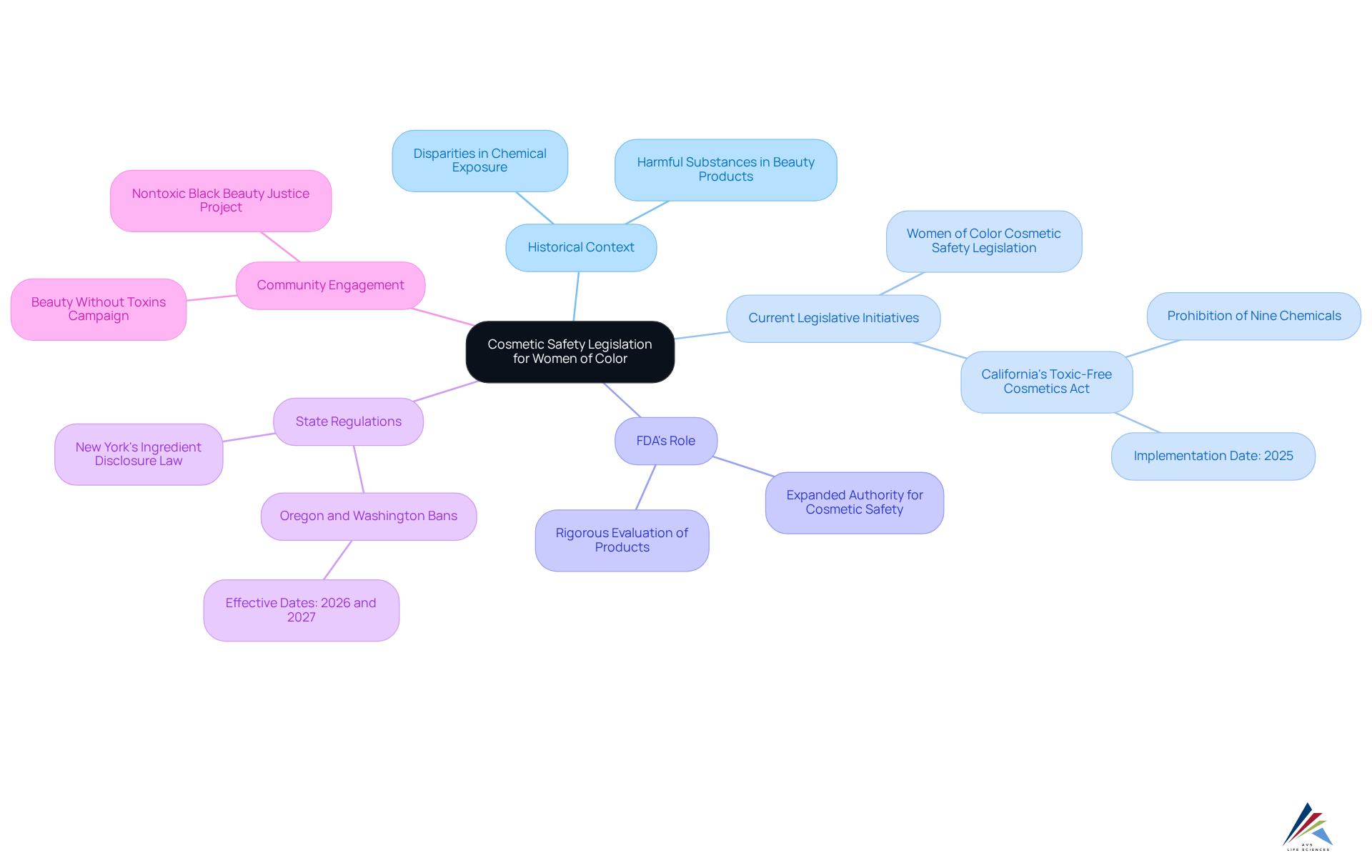
The terrain of beauty regulation has undergone significant transformation, particularly in response to the growing concerns surrounding women of color . Historically, many beauty products have contained harmful substances that disproportionately affect this demographic. Recent legislative initiatives, specifically the , seek to address these inequities by mandating that all beauty products adhere to stringent . Notably, the FDA has been endowed with expanded authority to oversee cosmetic safety, ensuring that products undergo rigorous evaluation before they reach consumers.
State-level regulations have also emerged, exemplified by , which will prohibit nine chemicals and three chemical groups starting in 2025. These initiatives are critical, as research reveals that over 50% of products contain ingredients linked to cancer, reproductive or developmental harm, or endocrine disruption. Furthermore, approximately 50% of hair products targeted at Black women contain , compared to only 7% for those aimed at white women. This stark disparity highlights the to address the issue.
Grasping these evolving regulations is essential for both manufacturers and consumers. It not only informs product development but also empowers consumers to make informed purchasing decisions, ensuring that women of color provides access to safe and effective beauty products. As the industry continues to evolve, a commitment to transparency and safety will be paramount in fostering a healthier future for all consumers. Additionally, initiatives such as the and the CROWN Act underscore the significance of and the necessity for equitable beauty standards.
Analyze Key Legislative Initiatives: The Safer Beauty Bill Package
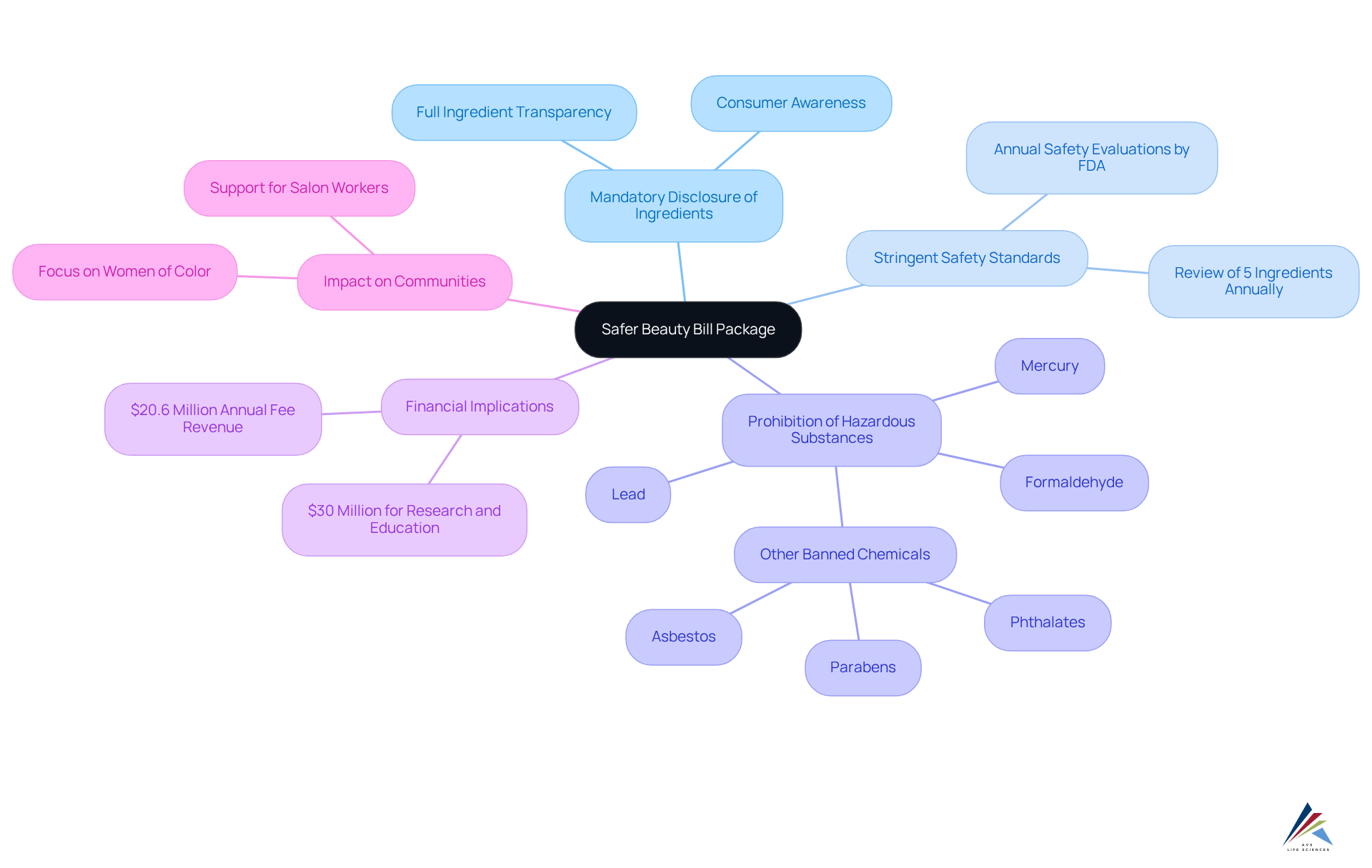
The represents a robust strategy aimed at enhancing the security of beauty products, with a particular emphasis on regulating harmful substances found in these items. This legislative initiative encompasses several critical components:
- Mandatory disclosure of ingredients by manufacturers
- The establishment of for beauty products
- A prohibition on various , including lead, mercury, and formaldehyde
These measures necessitate that manufacturers adapt their practices to align with the new regulations, ensuring that their products are not only safe but also transparent regarding . This framework is especially crucial for protecting the health of women of color and underscores the importance of , as they have historically encountered disparities in access to safe cosmetic options.
Given that women use an average of 12 personal care products daily, exposing themselves to 168 chemical substances, the urgency for rigorous regulations is underscored. The seeks to empower the FDA to perform annual safety evaluations of ingredients, mandating the review of five ingredients and contaminants each year. Legislators stress the immediacy of these reforms, citing a growing body of evidence linking toxic chemicals in beauty products to serious health risks, including hormone disruption and cancer.
Furthermore, beauty product companies would contribute $20.6 million annually in fee revenue, with $30 million allocated for research, public education, and safer alternatives as mandated by for communities of color and salon workers. The not only aims to protect consumers but also aspires to foster a more responsible and transparent beauty industry.
As Representative Jan Schakowsky articulated, 'We must keep enhancing our nation’s safety regulations for beauty items by prohibiting the most harmful substances found in personal care items.
Examine Health Risks: Toxic Chemicals in Cosmetics and Their Impact on Women of Color
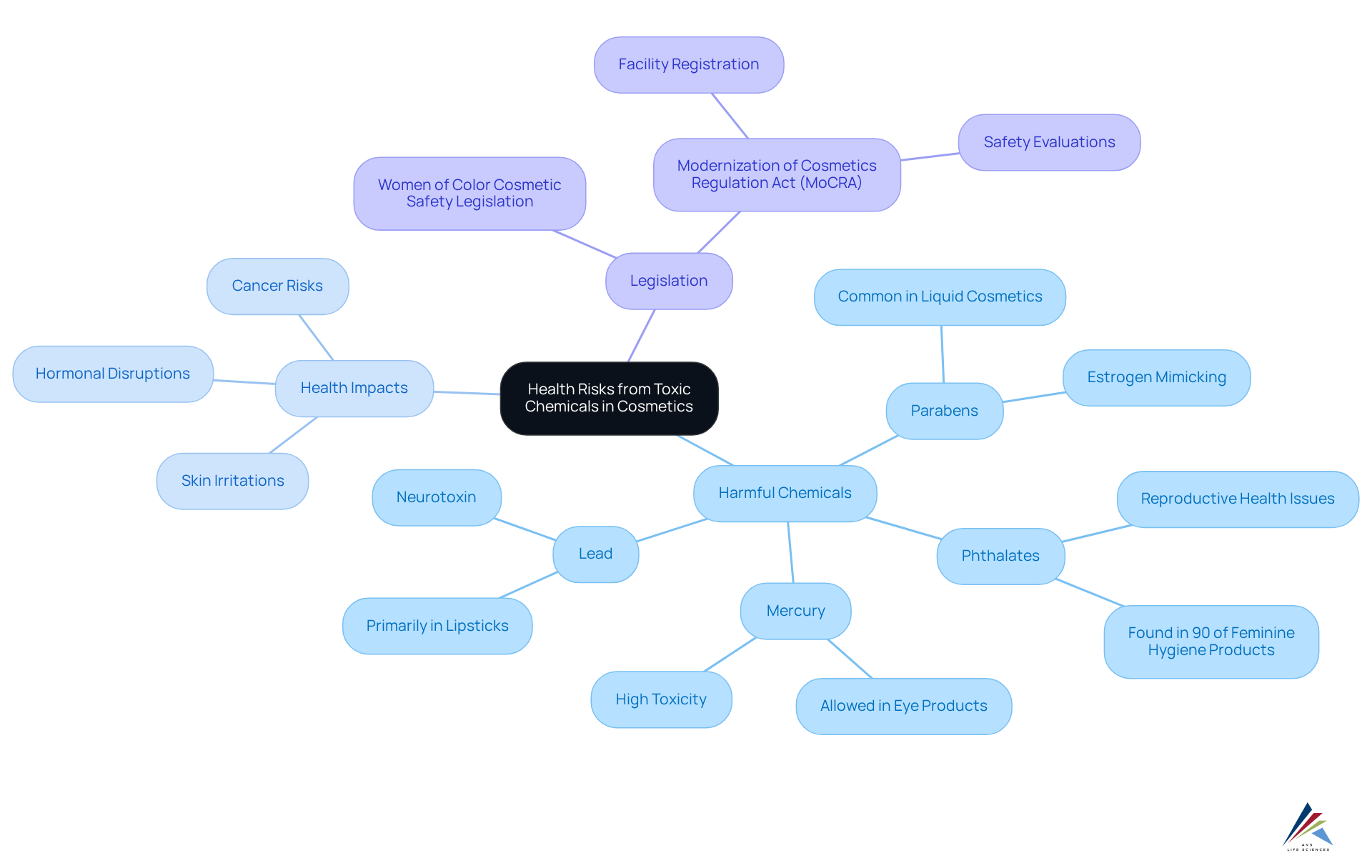
The need for arises from the significant exposure women of color have to , which leads to serious health concerns such as skin irritations, , and increased long-term risks, including cancer. Research reveals that common , phthalates, and formaldehyde are prevalent in beauty items targeted at this demographic.
For instance, studies indicate that:
- Parabens, often utilized as preservatives, can mimic estrogen and disrupt hormonal balance.
- Phthalates are associated with reproductive health issues, with over 90% of feminine hygiene products containing these chemicals.
The presence of these substances in beauty products has been linked to detrimental impacts on women's health, particularly among at-risk groups, underscoring the importance of . Notably, mercury and lead, also found in cosmetics, pose further health risks.
Understanding these risks allows stakeholders to prioritize compliance with safety regulations, including the and the , which mandates and safety evaluations. This comprehension not only guides product development but also empowers consumers to make informed decisions.
Awareness initiatives and educational resources are vital in helping women of color advocate for , identify harmful products, and improve their overall health and well-being.
Implement Compliance Strategies: Navigating New Regulations in Cosmetic Safety
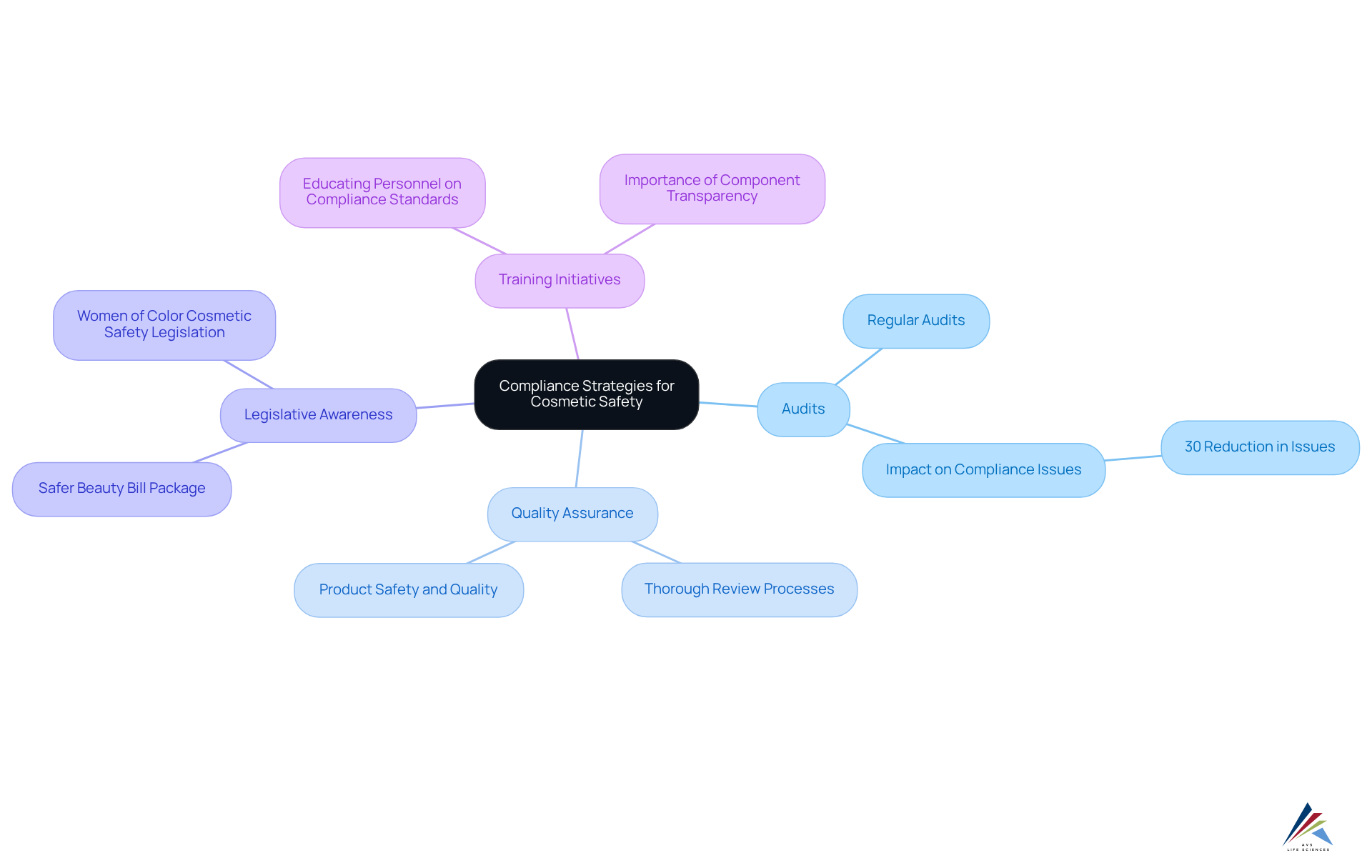
To successfully navigate the evolving landscape of cosmetic regulatory standards, manufacturers must implement a proactive compliance strategy. Central to this approach is the execution of comprehensive audits of components, which are essential for ensuring product safety and quality. Statistics reveal that companies conducting regular audits of components see a , emphasizing the critical nature of this practice.
Noteworthy examples of in cosmetics can be observed in brands that have integrated thorough auditing processes into their operations. For instance, a leading skincare firm reported a significant decrease in product recalls after instituting a rigorous review process for components, illustrating the .
With the taking effect, it is imperative for producers to remain informed about the and its legislative changes. Allocating resources to that educate personnel on and the significance of component transparency is crucial. Furthermore, establishing clear communication channels with regulatory bodies can streamline the , fostering a collaborative relationship that benefits both parties.
By emphasizing compliance through ingredient audits and robust measures, manufacturers not only protect consumer health but also enhance their brand reputation and cultivate trust within the community.
Conclusion
The landscape of cosmetic safety legislation is evolving to prioritize the health and well-being of women of color, addressing historical disparities in product safety and ingredient transparency. Recent initiatives, including the Safer Beauty Bill Package and state-level regulations like California's Toxic-Free Cosmetics Act, aim to create a safer beauty environment by mandating stricter safety standards and ingredient disclosures. These legislative efforts are crucial in ensuring that beauty products do not pose undue health risks, particularly to marginalized communities.
Key discussions in the article highlight the alarming prevalence of toxic chemicals in cosmetics, disproportionately affecting women of color. With a significant portion of beauty products containing harmful substances linked to serious health risks, the need for comprehensive legislation is more pressing than ever. The commitment to transparency and safety not only empowers consumers but also compels manufacturers to adapt their practices, fostering a more responsible beauty industry.
Ultimately, the drive towards equitable cosmetic safety legislation represents a vital step in advocating for the health of women of color. Stakeholders are encouraged to remain engaged with these evolving regulations and support initiatives that promote safer beauty practices. By prioritizing compliance and transparency, the beauty industry can ensure that all consumers have access to products that are not only effective but also safe, paving the way for a healthier future for everyone.
Frequently Asked Questions
What is the primary focus of the women of color cosmetic safety legislation?
The primary focus is to address the inequities in cosmetic safety that disproportionately affect women of color by mandating that all beauty products adhere to stringent health standards.
What has led to the transformation of beauty regulation?
The transformation has been driven by growing concerns surrounding the safety of beauty products for women of color, particularly due to the presence of harmful substances in many products.
What authority has been expanded for the FDA regarding cosmetic safety?
The FDA has been granted expanded authority to oversee cosmetic safety, ensuring that products undergo rigorous evaluation before reaching consumers.
What is California's Toxic-Free Cosmetics Act?
It is a state-level regulation that will prohibit nine chemicals and three chemical groups starting in 2025, aimed at enhancing cosmetic safety.
What percentage of beauty products contain harmful ingredients?
Research indicates that over 50% of beauty products contain ingredients linked to cancer, reproductive or developmental harm, or endocrine disruption.
How do hair products targeted at Black women compare to those aimed at white women in terms of endocrine-disrupting chemicals?
Approximately 50% of hair products targeted at Black women contain endocrine-disrupting chemicals, compared to only 7% for those aimed at white women.
Why is understanding these regulations important for manufacturers and consumers?
Understanding the regulations is essential for manufacturers to inform product development and for consumers to make informed purchasing decisions regarding safe and effective beauty products.
What initiatives emphasize the importance of community engagement in beauty standards?
Initiatives such as the Beauty Without Toxins Campaign and the CROWN Act highlight the significance of community engagement and the necessity for equitable beauty standards.
List of Sources
- Explore the Landscape of Cosmetic Safety Legislation for Women of Color
- cleanwater.org (https://cleanwater.org/2024/11/04/tea-toxic-beauty-disproportionate-impacts-toxic-chemicals-beauty-products-women-color)
- ewg.org (https://ewg.org/news-insights/news-release/2025/02/ewg-report-hazardous-chemicals-cosmetics-disproportionately)
- pmc.ncbi.nlm.nih.gov (https://pmc.ncbi.nlm.nih.gov/articles/PMC9628299)
- cleanwater.org (https://cleanwater.org/2024/12/16/beauty-justice-unequal-exposure-and-path-forward)
- ewg.org (https://ewg.org/research/higher-hazards-persist-personal-care-products-marketed-black-women-report-reveals)
- Analyze Key Legislative Initiatives: The Safer Beauty Bill Package
- ewg.org (https://ewg.org/personal-care-products-safety-act-would-improve-cosmetics-safety)
- innersensebeauty.com (https://innersensebeauty.com/blogs/blog/supporting-the-safer-beauty-bill-package?srsltid=AfmBOorOw8VGqJLvX7EoBag-3oY989HfmSOKggnbIR5UDlvW-gQMi4yP)
- womenshealthmag.com (https://womenshealthmag.com/beauty/a65438381/safer-beauty-bill-package)
- anti-a.org (https://anti-a.org/news/en/us-lawmakers-unveil-safer-beauty-bill-package-to-ban-toxic-ingredients-and-protect-vulnerable-communities)
- advocacy.consumerreports.org (https://advocacy.consumerreports.org/press_release/lawmakers-introduce-landmark-safer-beauty-bill-package-to-address-dangerous-gaps-in-cosmetic-safety)
- Examine Health Risks: Toxic Chemicals in Cosmetics and Their Impact on Women of Color
- intechopen.com (https://intechopen.com/chapters/72654)
- enhesa.com (https://enhesa.com/resources/article/health-risks-of-chemicals-in-cosmetics-unpacking-the-dangers)
- ewg.org (https://ewg.org/research/teen-girls-body-burden-hormone-altering-cosmetics-chemicals)
- integrishealth.org (https://integrishealth.org/resources/on-your-health/2022/october/what-toxins-are-in-your-beauty-products)
- Implement Compliance Strategies: Navigating New Regulations in Cosmetic Safety
- news.market.us (https://news.market.us/cosmetics-statistics)
- fortunebusinessinsights.com (https://fortunebusinessinsights.com/cosmetics-market-102614)
- 40+ Beauty Industry Statistics You Must Know in 2025 (https://bizplanr.ai/blog/beauty-industry-statistics)
- statista.com (https://statista.com/outlook/cmo/beauty-personal-care/worldwide)
- The Ultimate List of Beauty Industry Stats (2026) (https://explodingtopics.com/blog/beauty-industry-stats)